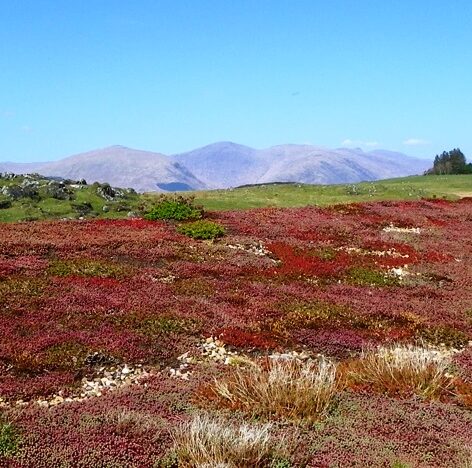
Sedum Roof
The centre was designed to have a living roof of grass . Grass or wild flower roofs need a depth of soil which the roof was not designed to support. Instead the roof had thin lawn turf laid over an irrigation system. This failed for a variety of reasons and the grass died leaving a roof of patchy moss and exposed irrigation pipes clogged by Lismore’s hard water.
The first time the idea of a sedum roof was mooted by me was 2015 as a solution to the problem. CELM made money available for work in 2016 and we bought a small quantity of pre grown sedum blanket which was successful but expensive. The roof is more than 300 square metres and to do that with sedum blanket would cost tens of thousands of pounds. A cheaper alternative was to propagate from the sedum we bought and plant it through lawn turf which was laid upside down, killing the grass. The turf was stabilised by the grass roots and sedum thrives on Lismore’s occasional drought.
The roof work over the last five years has all been done by volunteers, with several donations of sedum which has increased the diversity of species on the roof. We have presently planted 192 square metres with turf and sedum plants and have another 127 square metres to go.
This year we have received funding to complete the sedum roof. With experience of previous plantings we now have confidence in our technique.
The benefits of a sedum roof are: It is lightweight compared to other green roofs; it protects the roof’s waterproof membrane; it provides insulation for the building; it encourages biodiversity like bees, butterflies and moths…….and it looks good .
Report: Pauline Dowling
6 May 2021
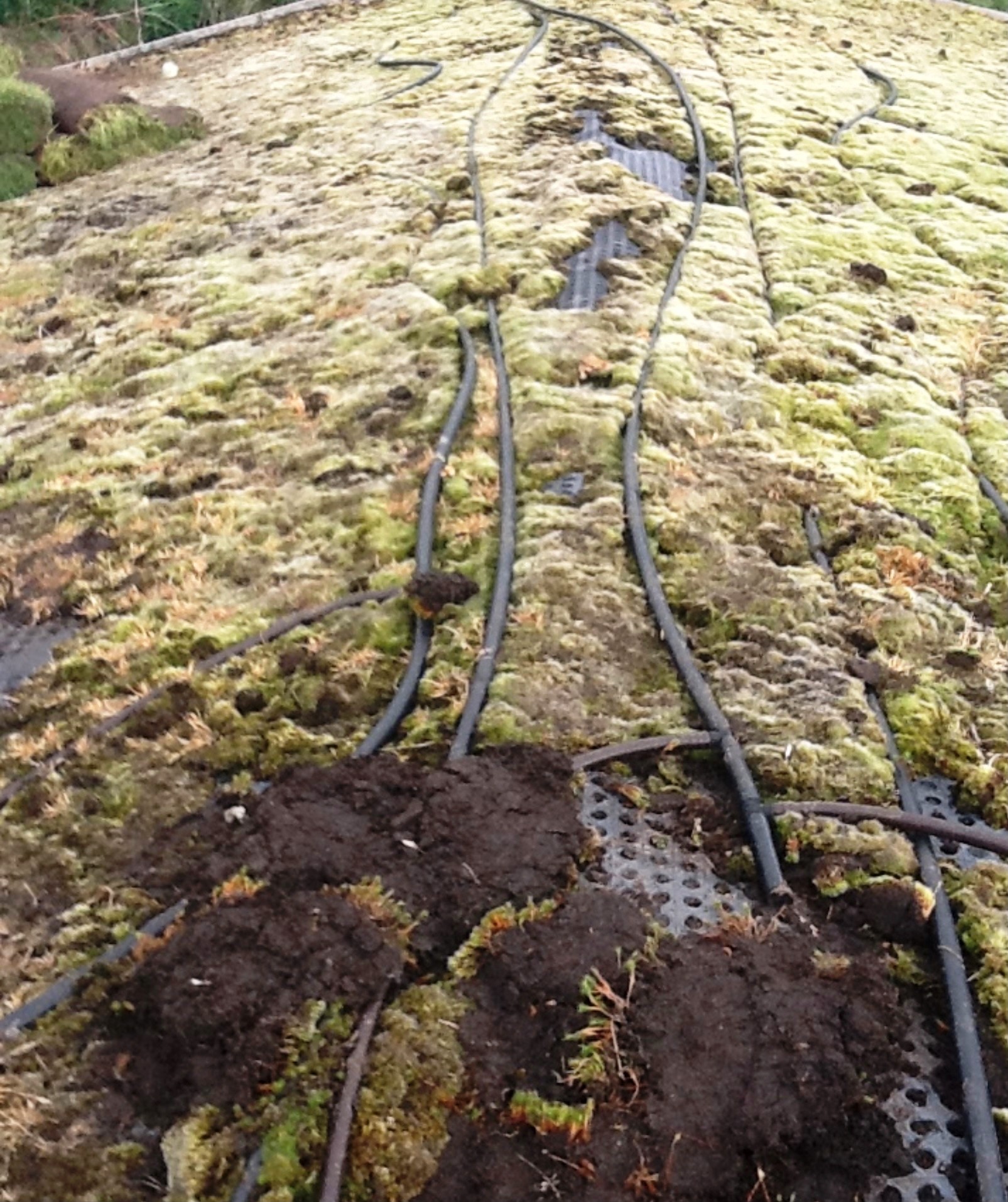
celm grass roof 2016
Thw grass roof in 2016The roof in 2016