
In spite of the continued battle with rain and mud, each day has been a success – with today the most remarkable so far. Early in the work in the east end of the trench, after a very wet start, two more almost intact crucibles emerged from the peaty mud.
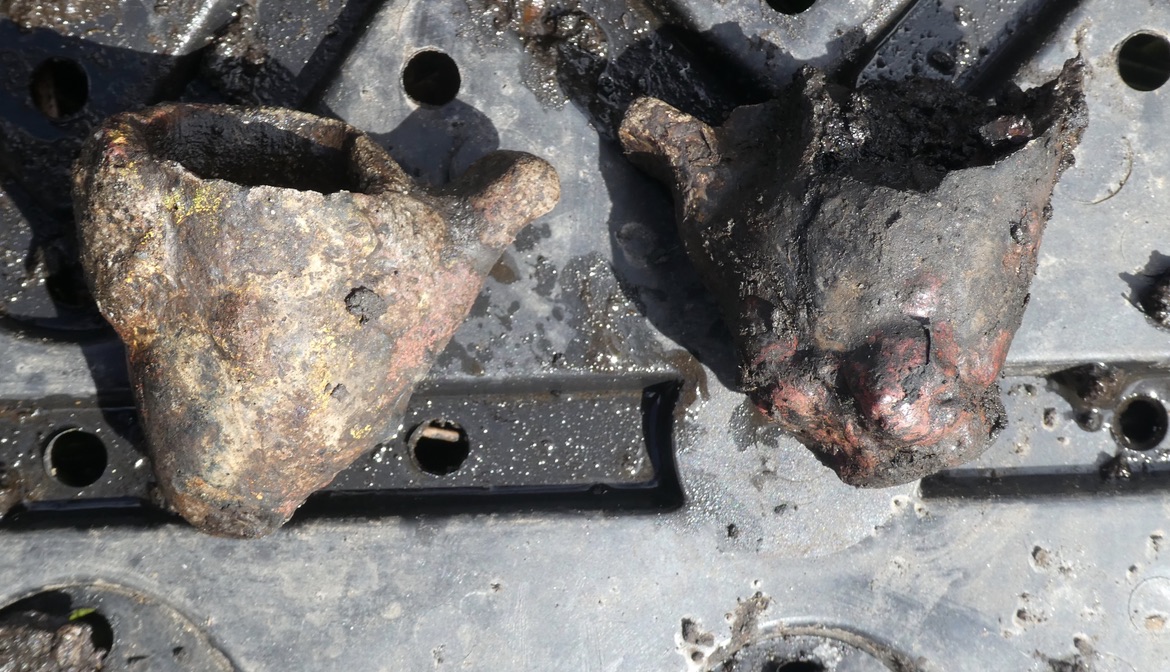
Two more almost intact crucibles
Clare emailed images of our crucibles to Dr Gemma Cruikshanks, a specialist at the National Museum of Scotland. The answer came back quickly that they probably date to the 7th/8th century. This places the soil layer, and all the finds, at the same period as the burial found nearby in 2018 (confirmed by radiocarbon dating). Evidence is accumulating that this is a major Early Church monastic site with associated craft activities, similar to Portmahomack in Ross-shire and Nendrum in Co. Down (a daughter monastery of Bangor, at which Moluag is thought to have trained). Later in the day, the diggers unearthed clay moulds for fine casting of metal (pouring molten metal from crucibles), suggesting that the metal craftsmen could have been working with silver. Images will appear in the report for Day 6.
One of the principal aims for this dig was to explore and interpret the square building detected by geophysical survey to the east of the roundhouse. Later today, Clare was able to show that the metal working finds in the area are continuous under the square wall building, confirming that it was built later than the craft activities. Once we have a set of radiocarbon dates for charcoal sampled across the trench, it will be possible to establish whether the roundhouse occupation and the craft activities were contemporary.
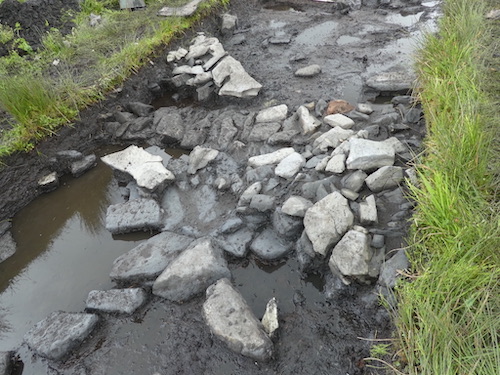
Two phases of wall building after the metal working era
Will tomorrow bring even more surprises?