
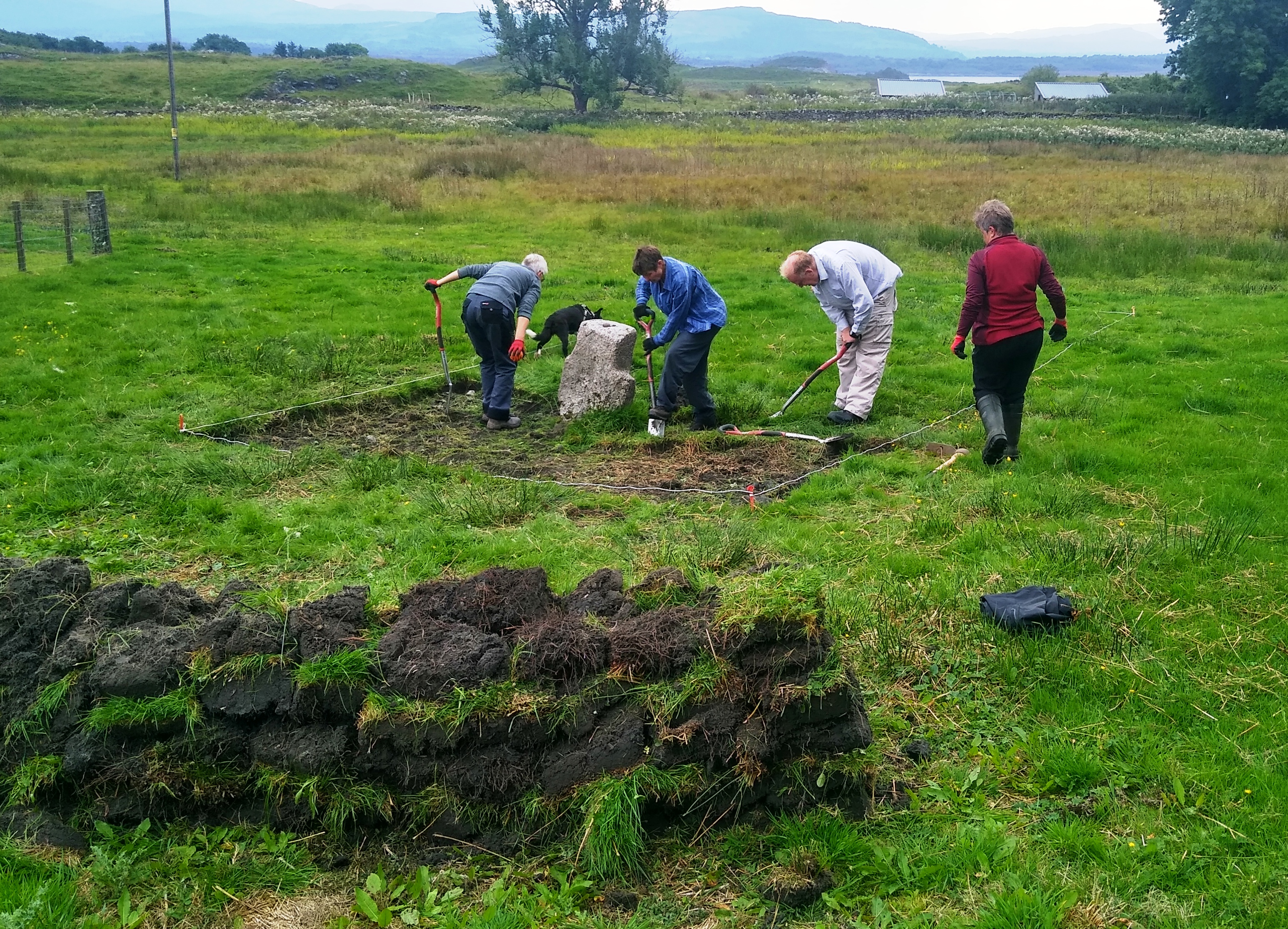
Progress Report, Day 3.
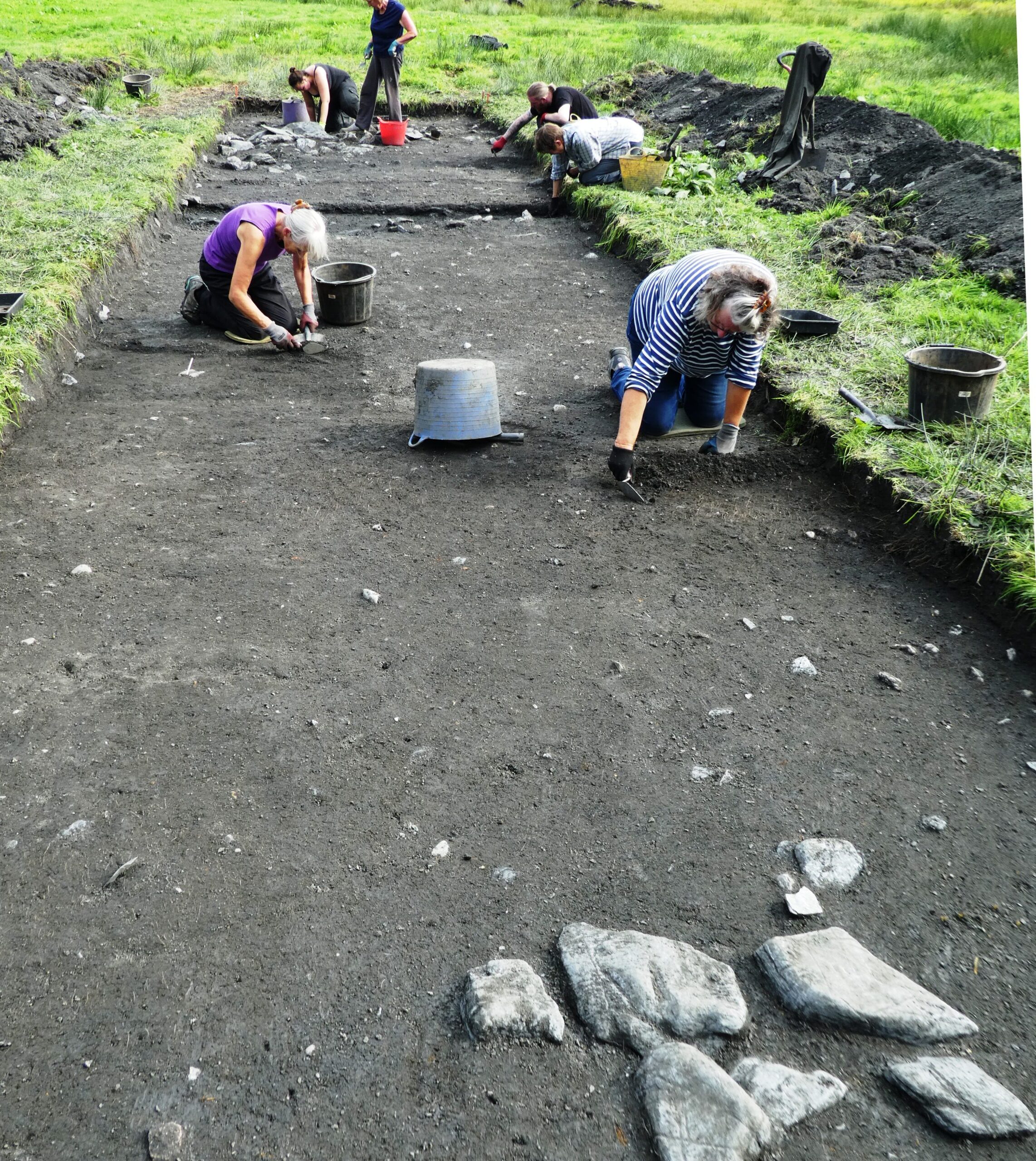
We knew from 2018 that it would take several days of patient trowelling to reach our goal: the Early Church cemetery. This year we have been speeded along the way by Andy Hough, who removed the turf from three long trenches with his digger. Three days of work by up to 16 volunteers have now started to reveal what seems to be the cemetery wall and also a couple of unidentified structures in the wet area of the glebe, which appeared in the geophysical survey in 2019. Keep an eye on the next reports to find out more.
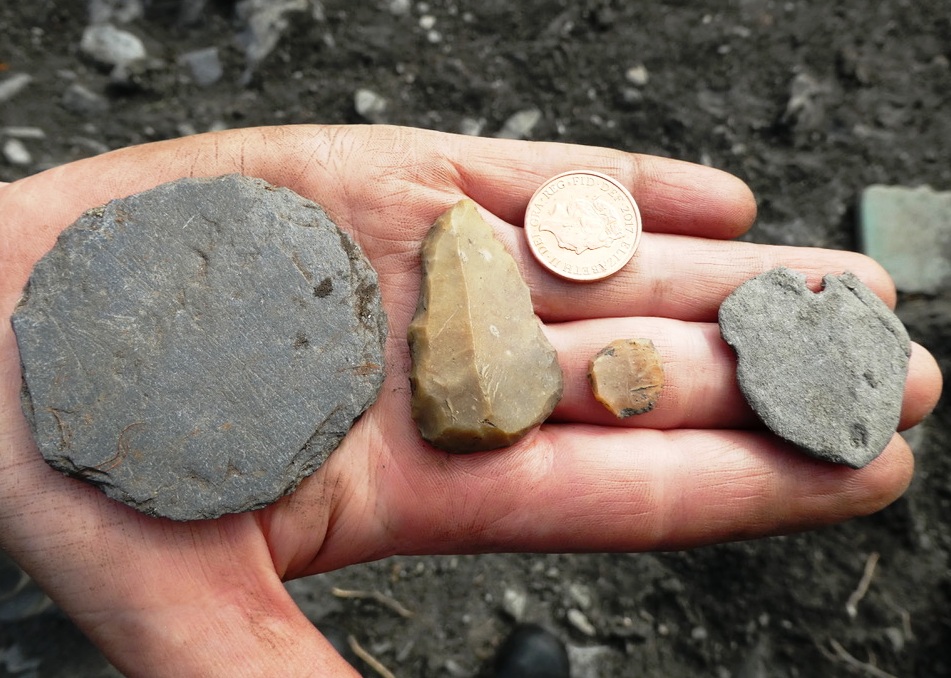
What we didn’t expect to find in these superficial layers was evidence of the prehistory of the glebe. In two of the trenches we have found worked flint including a well made scraper. Flint does not occur in the area and the nearest source is in Antrim, although there are beaches in Argyll where flint pebbles can be found. Flint tools were an essential part of the prehistoric toolkit before the advent of metal; the scraper seems to be evidence for the Neolithic or Bronze Age on Lismore, and “trading” with other areas. The only other evidence for the Neolithic to date has been the stone axe head in the museum collection.
Other finds include slag, indicating metal working on the site. In 2018 we also found large amounts of slag at several places in the glebe, providing evidence of extensive iron smelting, presumably using bog iron ore. It is possible that there was a long history of metal working in the area from prehistory to the medieval (for example forging nails for the cathedral).
P1000155 big dig 8.09.21
Trench 12 after 3 days of patient trowelling, the emerging cemetery wall at the far end.
UNADJUSTEDNONRAW_thumb_7027 big dig 8.09.21
Finds Day 1, including the flint scraper and a small piece of worked flint
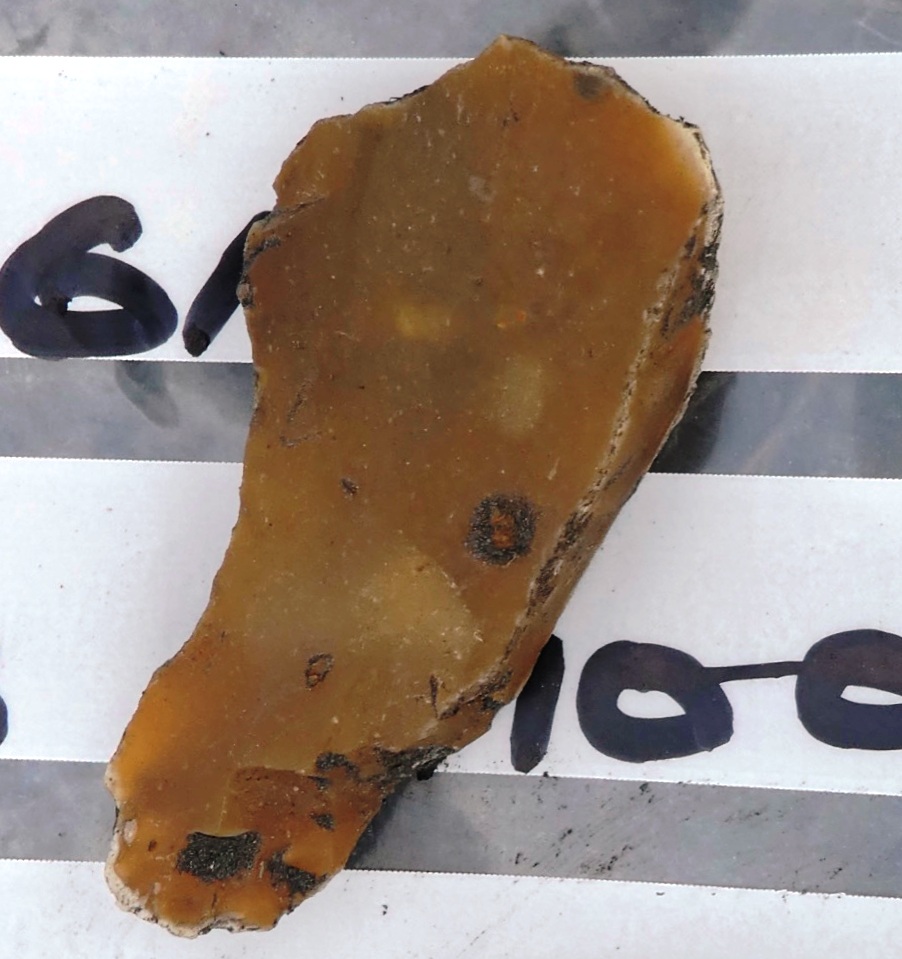
S7d+z4t4RTmwcV++ASCewQ_thumb_7031 8.09.21
Finds Day 3, worked flint 1
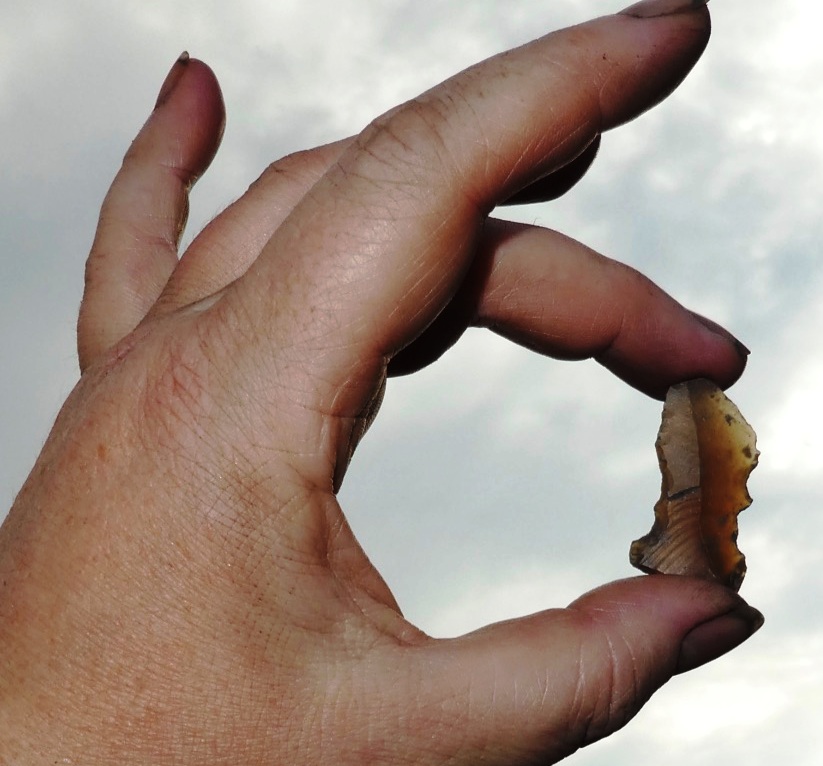
eGn8aOxFTzGpS6gCfn%drg_thumb_7032 Big dig 8.09.21
Finds Day 3, worked flint 2