
Lismore and the War – curated by Douglas Breingan and Dave Clarke.
This special exhibition is in 4 parts.
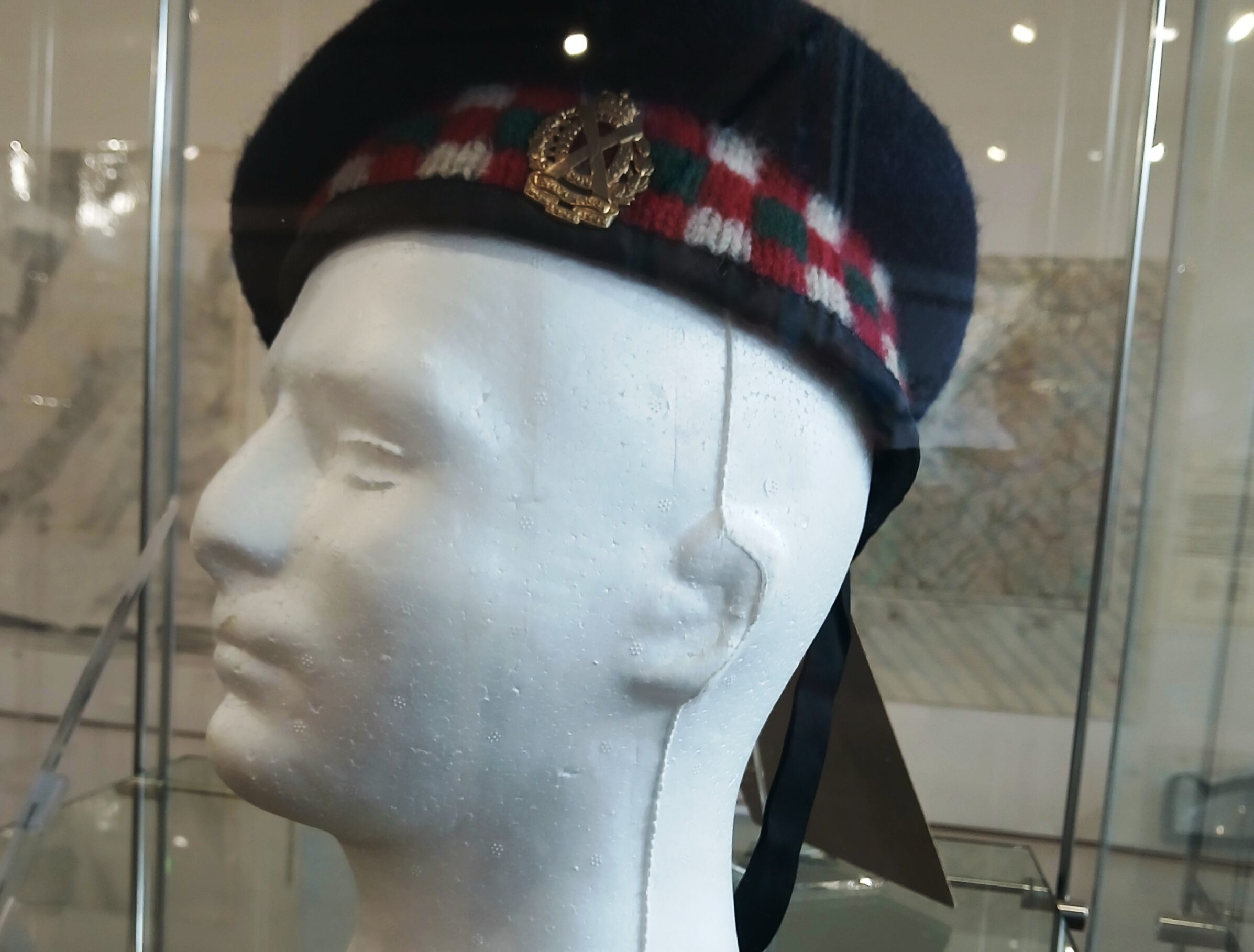
The first part in 2 large cabinets ,highlights the 8th Battalion of the Argyll and Sutherland Highlanders which was so ubiquitous in the Oban area it was simply known as the 8th. The cabinet contains items of uniform badged to the battalion.

Exhibition Lismore at war 2026
Exhibition Lismore at war 2026
It also mentions Mrs McLachan at Achuran House who formed a comforts fund for the men of the 8th Argyll’ in the first weeks of the war. Lismore’s women providing hundreds of shirts, socks and hose tops to the battalion when on active service. Children were also involved. Catherine and Euphemia Black organised regular collections of eggs which were donated to Wounded troops in the Urban War Hospital.
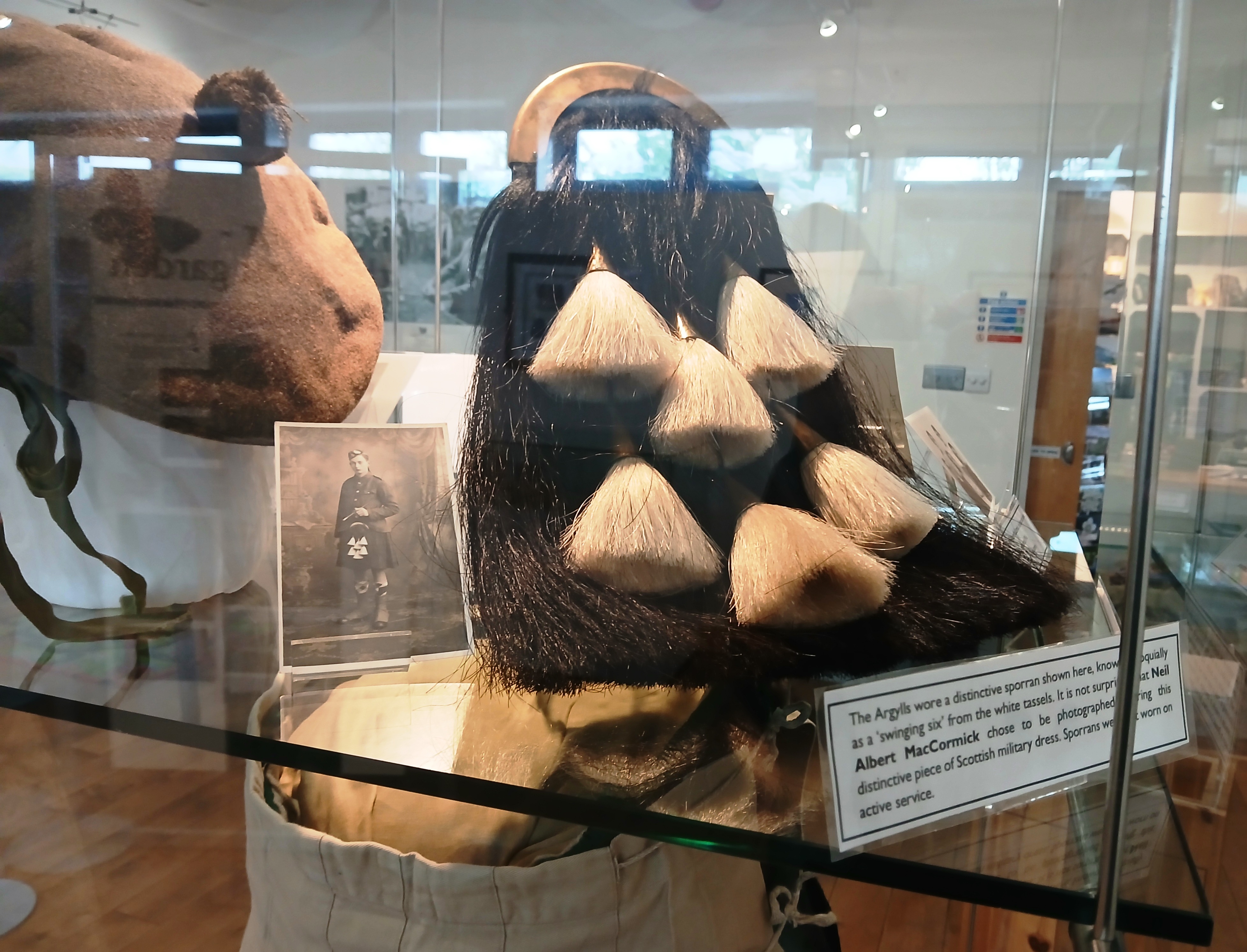
The 2nd cabinet has among other things, the Argyll’s distinctive sporran worn by Neil Albert MacCormick of Daisy Bank and the bonnet of the Scottish H Horse Squadron based at Connell where many Lismore men enlisted
The 2nd Part inside the door on the right is a smaller cabinet and concerns 2 households of The MacCormicks – a Lismore family at war. The fate of the family from Daisy Bank and who owned and ran the Lismore Stores, makes for sad reading. Not only did they lose their son Neil Albert but also Catherine and Annie who died on the same day from the deadly flu pandemic of 1918, Catherine in Glasgow , Anne in Lismore.
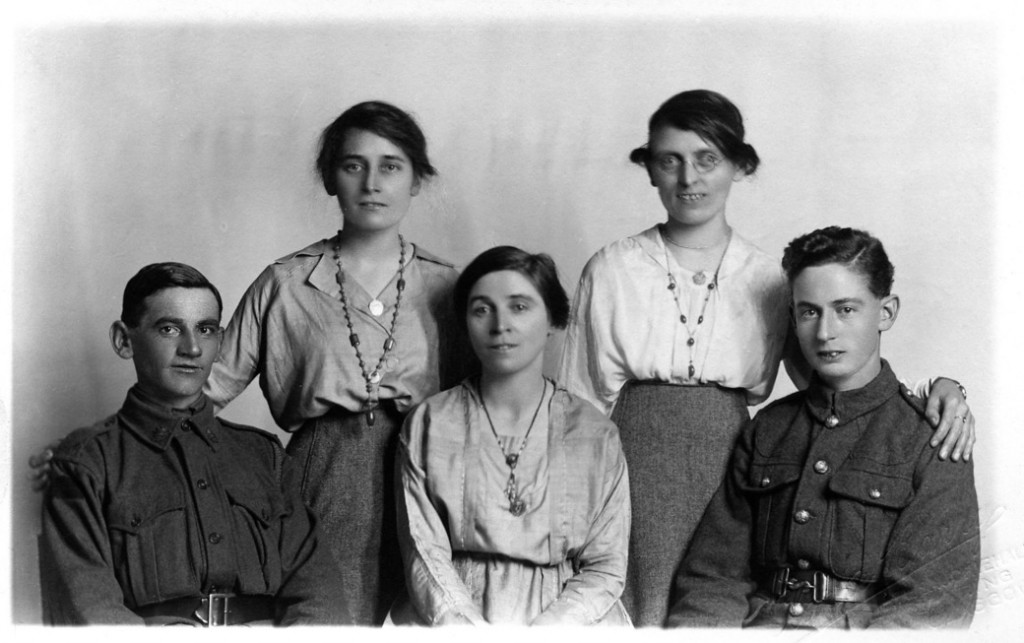
October 1918 at Daisybank: L to R – Neil Munro (Australian visitor), May, Annie, Kitty and Neil
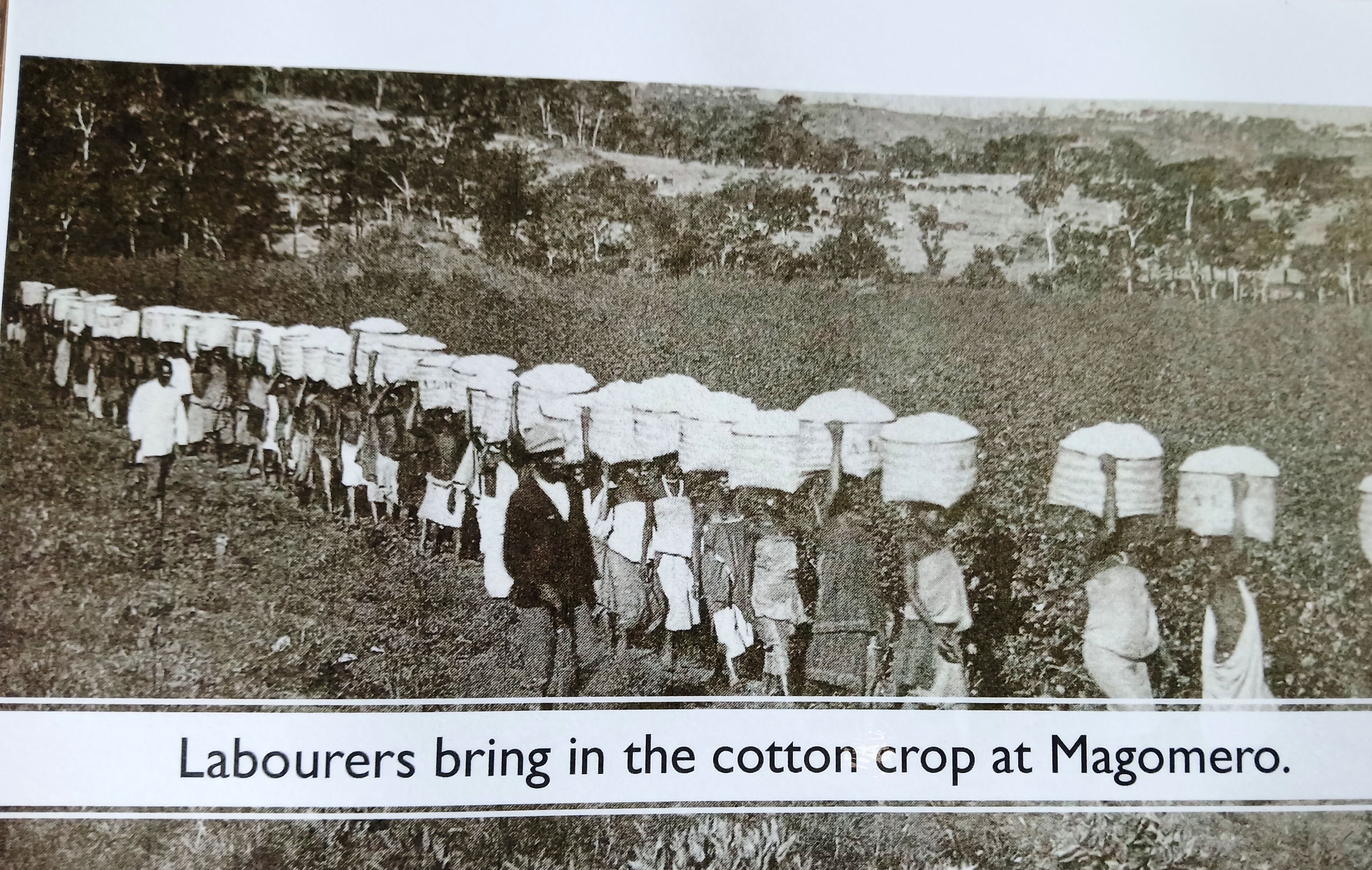
Meanwhile the MacCormick family from Baligarve was caught up in a tragedy in Nyasaland (modern day Malawi) where William Jervis Livingstone of Bachuil was the manager of Magamero estate owned by a relative Bruce Low Livingstone. And where after several years mistreating the native workforce, they rebelled and decapitated William Jervis and shot Duncan MacCormick when he went to his rescue. Duncan was not despised by the workforce. A booklet tells the story of Magamero, in particular the fate of the rebel leader John Chilembwe a Baptist minister and later a Malawian hero whose anniversary is now a public holiday and who appeared on the plinth in Trafalgar Square in London.

Exhibition 2026 Magomero estate tragedy
Exhibition 2026 Magomero estate tragedy

Exhibition 2026 Magomero estate tragedy
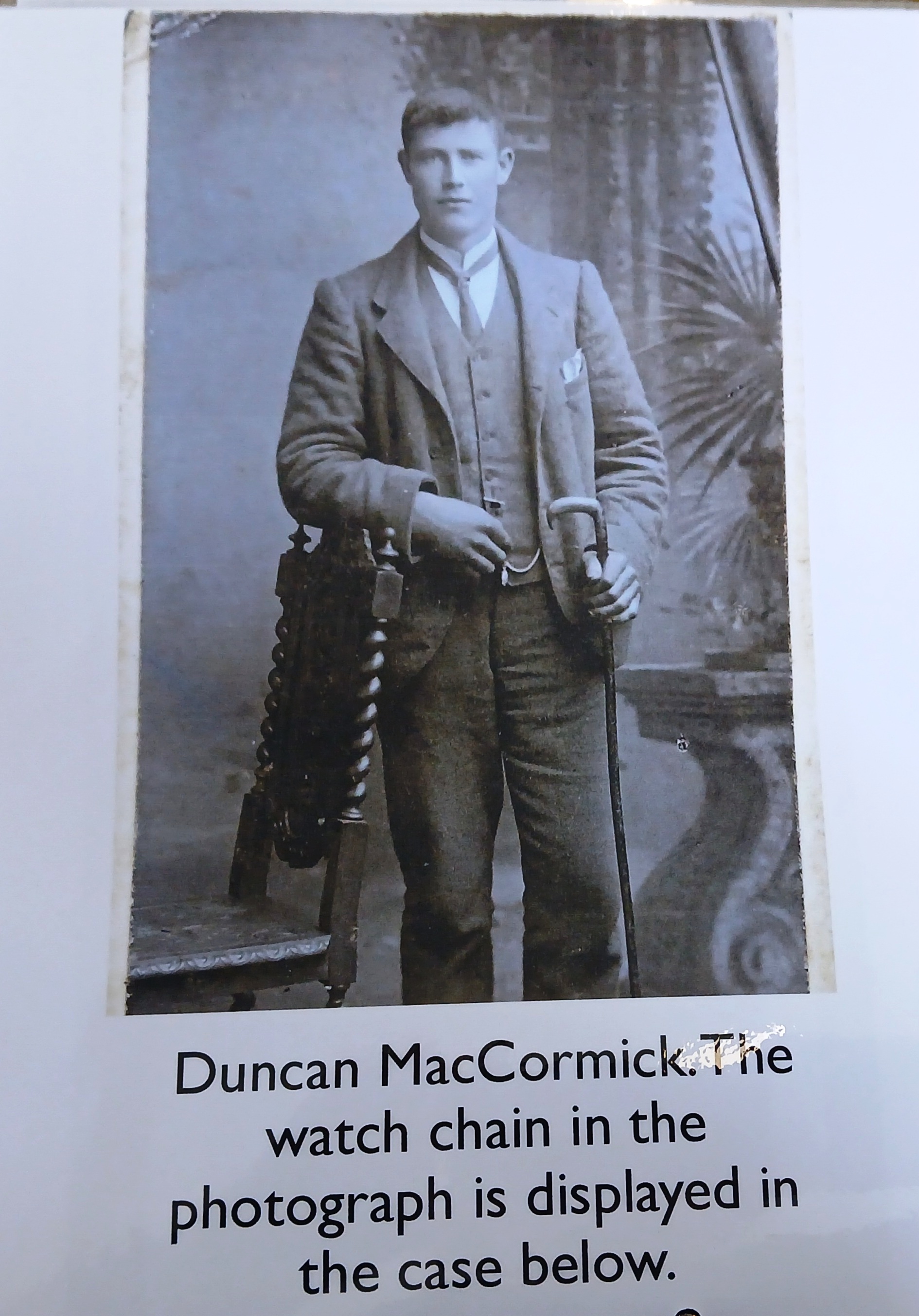
Exhibition 2026 Magomero estate tragedy Duncan MacCormick
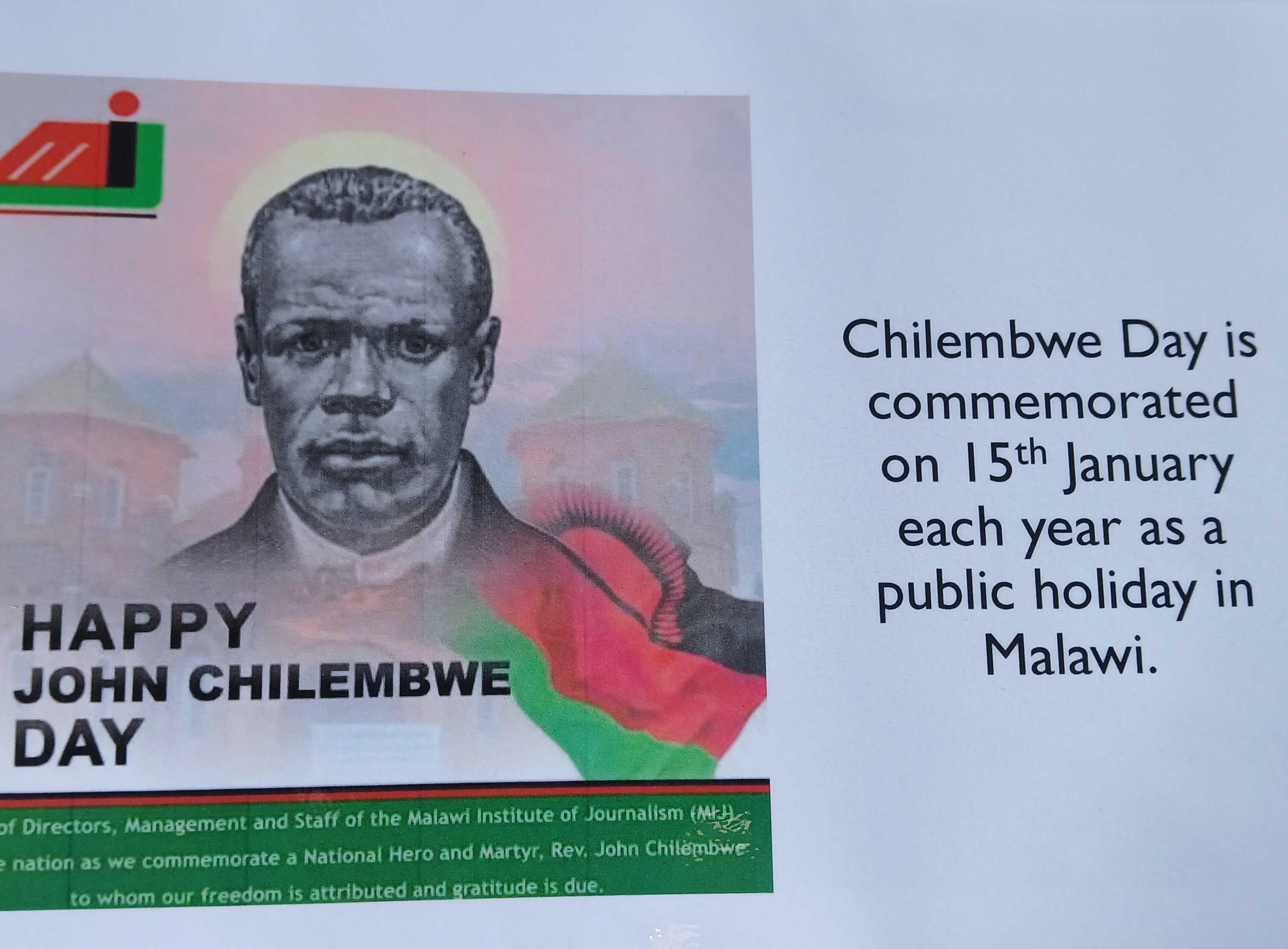
Exhibition 2026 Magomero estate tragedy
The 3rd part, on the wall on the left as you enter, displays war time nautical charts , British, German and Russian. Highlighting Lismore’s strategic wartime and post war time position. With clear explanations.
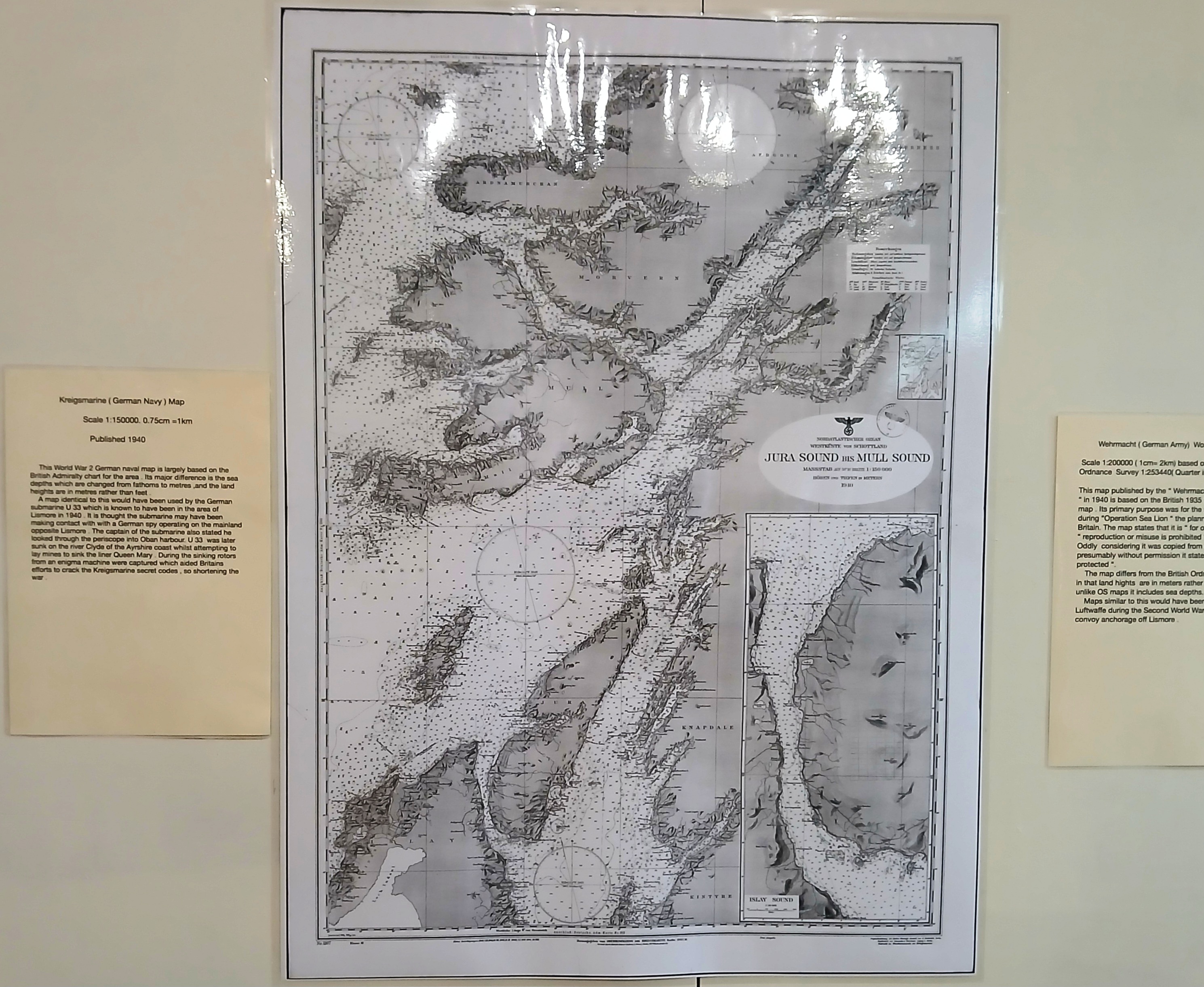
Exhibition 2026 Nautical maps

Exhibition 2026 Nautical maps
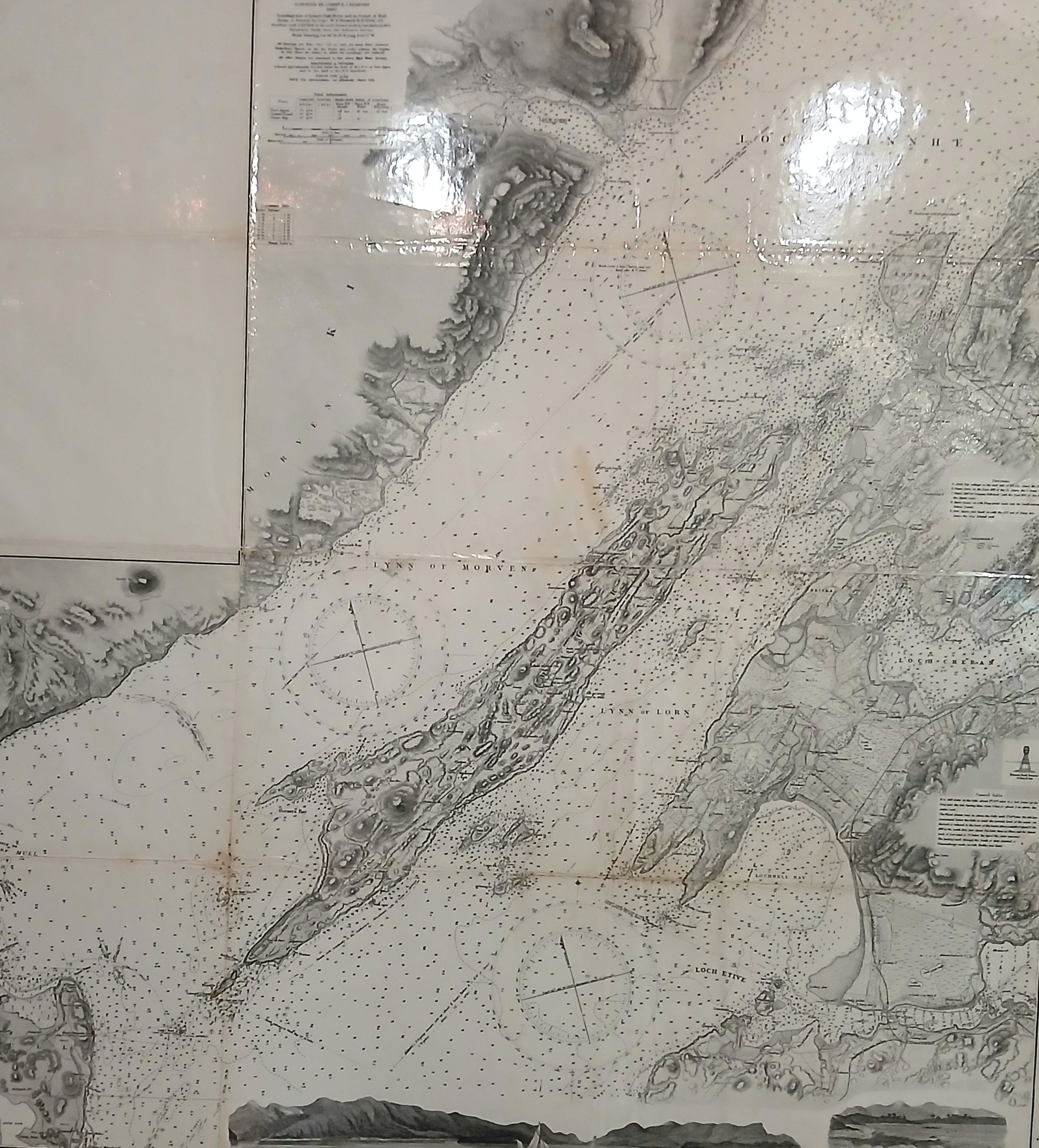
Exhibition 2026 Nautical maps
The 4th part concerns the war time work of the late Valerie Livingstone of Bachuil
Valerie Livingston of Lismore 1926 -2025
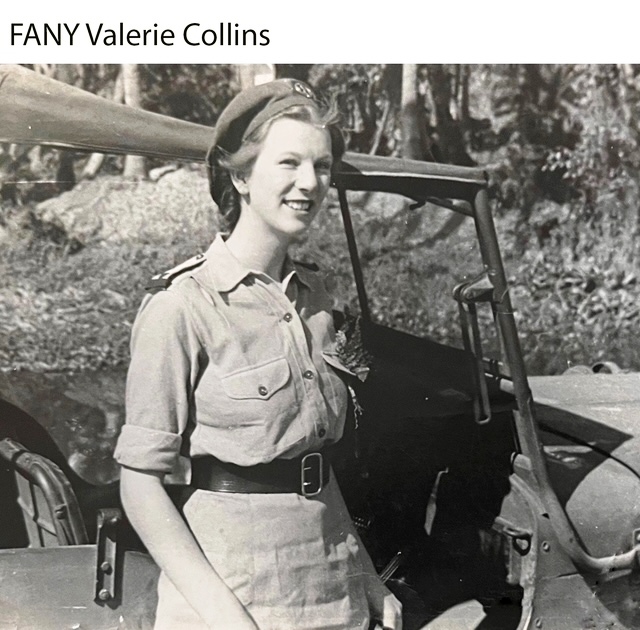
Valerie Livingstone nee Collins in India
Valerie Livingston of Lismore was born on 6th June 1926 in Norfolk, the youngest of 6 girls. In 1942, when she was 16, she joined the First Aid Nursing Yeomanry (F.A.N.Y.) and was trained in Morse code at Fawley Court, Henley on Thames. After her training, she served at Belhaven Hill, Dunbar as a wireless operator sending out messages to support the Deception of Operation Fortitude until D-Day, for which work she was awarded the Chevalier de Légion D’honneur, France’s highest award. The deception operation ceased on D-Day, 6 thJune 1944. Later, she was deployed to the Indian subcontinent and the Far East with South East Asia Command. In Calcutta, she was responsible for morse code communication with British agents working behind Japanese lines. Altogether, over 6,OOO FANYs served in the Second World War
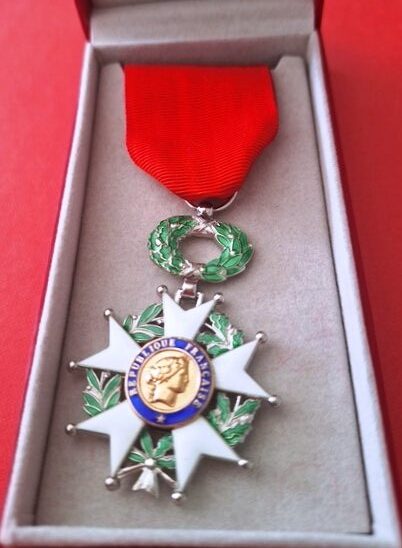
Valerie Livingstone nee Collins’s Chevalier de Légion D’honneur,
Valerie was the youngest of 6 girls to Dickie and Milie Collins. When war broke out in 1939 she was 13 years old, but had already seen most of her sisters leave home. As soon as she was 16 she joined the First Aid Nursing Yeomanry (F.A.N.Y.). This was a volunteer outfit that had been formed in 1907 and was active in both nursing and intelligence work during the World Wars.
Its members dress in British military-style uniforms, however it is not part of the Regular Army, or Army Reserve, nor is it part of any branch of the Armed Forces. All members are considered to be commissioned officers, and when serving alongside regular forces, have the privilege of using the officers’ mess. The junior trained rank is Ensign.
At the start of the war 1,500 FANYs were absorbed into the newly formed Auxiliary Territorial Service (ATS) as motor mechanics but these FANY/ATS would continue to wear their FANY flash, a tradition dating back many years, with the chinstrap of their hats over the crown. In her role in Foyle’s War, Weeks’ character, Samantha “Sam” Stewart, famously served as a driver in the FANY (First Aid Nursing Yeomanry), a crucial women’s voluntary organisation during World War II.
The FANY provided vital support, including driving ambulances, acting as dispatch riders, and working in intelligence. Because her character’s uniform features exact FANY pins and buttons, her on-screen portrayal has even been the subject of dedicated research and discussion by military badge historians.
However, an autonomous FANY HQ ran simultaneously in London and these FANYs became known as the ‘Free FANYs’’, and they wore their uniform as of right. These Free FANYs began with their involvement in the highly secretive Auxiliary Units set up in 1940 as a stay-behind force in case of invasion. But this rapidly expanded and by the end of the war over 3,000 FANYs had served with SOE; as trainers, coders, signallers, forgers, dispatchers, and, most famously, as agents.
They worked on coding and signals, acting as conductors for agents and providing administration and technical support for the Special Training Schools. Their work was top secret and often highly skilled.
Valerie joined in 1942 and was sent to be trained in Morse code at Fawley Court, Henley on Thames. After her training she was sent to serve at Belhaven Hill, Dunbar as a wireless operator sending out messages to support the Deception of Operation Fortitude until D-Day for which work she was awarded the Chevalier de Légion D’honneur, France’s highest award.
The deception operation ceased on D-Day, the 6th June 1944, so she was fortunate to have the day off on her 18th birthday. A few weeks later, she was part of a large group who were deployed to the Indian subcontinent and the Far East with South East Asia Command.
Valerie travelled to India in a troop ship, whose destination was Top Secret. However, the party of FANYs aboard were civilians, so unlike the rest of the troops, they needed visas in their passports. Only the British could be so daft. Arriving in Calcutta, she was responsible for morse code communication with British agents working behind Japanese lines. Once the war ended the FANYs were given priority transport back to the UK. On route she stopped in Malta and was very moved by the devastation that the George Cross island had endured.
Altogether over 6,000 FANYs served in the Second World War. Of the 50 women sent by SOE into France 39 were members of the FANY. Of these 39 women, 12 were murdered by the Nazis and one Corps member died in the field. Many decorations, of both the UK and other countries, were awarded to FANYs for their service and outstanding courage. The Princess Royal became Commandant-in-Chief of the Corps in 1981. The FANY was officially renamed the Princess Royal’s Volunteer Corps in 1999, after being given permission by Anne, Princess Royal to use her title, and is now referred to as FANY (PRVC). The original name has greater recognition, and greater prominence even in official publications and on its website.
Thanks to Niall Livingstone for his mother’s story.