
An exciting addition to the Museum in 2023 season is the newly displayed fragments from the Lismore High Cross. These have been in the museum for some years but this year they are a feature, thanks to Douglas Breingan who has erected a stand and cleverly lit them. In addition, to the two smaller stones he has added mirrors so you can see the intricate geometric patterns on the narrow sides.
They have to be seen to be appreciated as these images cannot capture them.
The stones are fragments from an 8th century Celtic high cross carved over 1300 years ago to stand in the monastery complex located in the area of the present parish church.
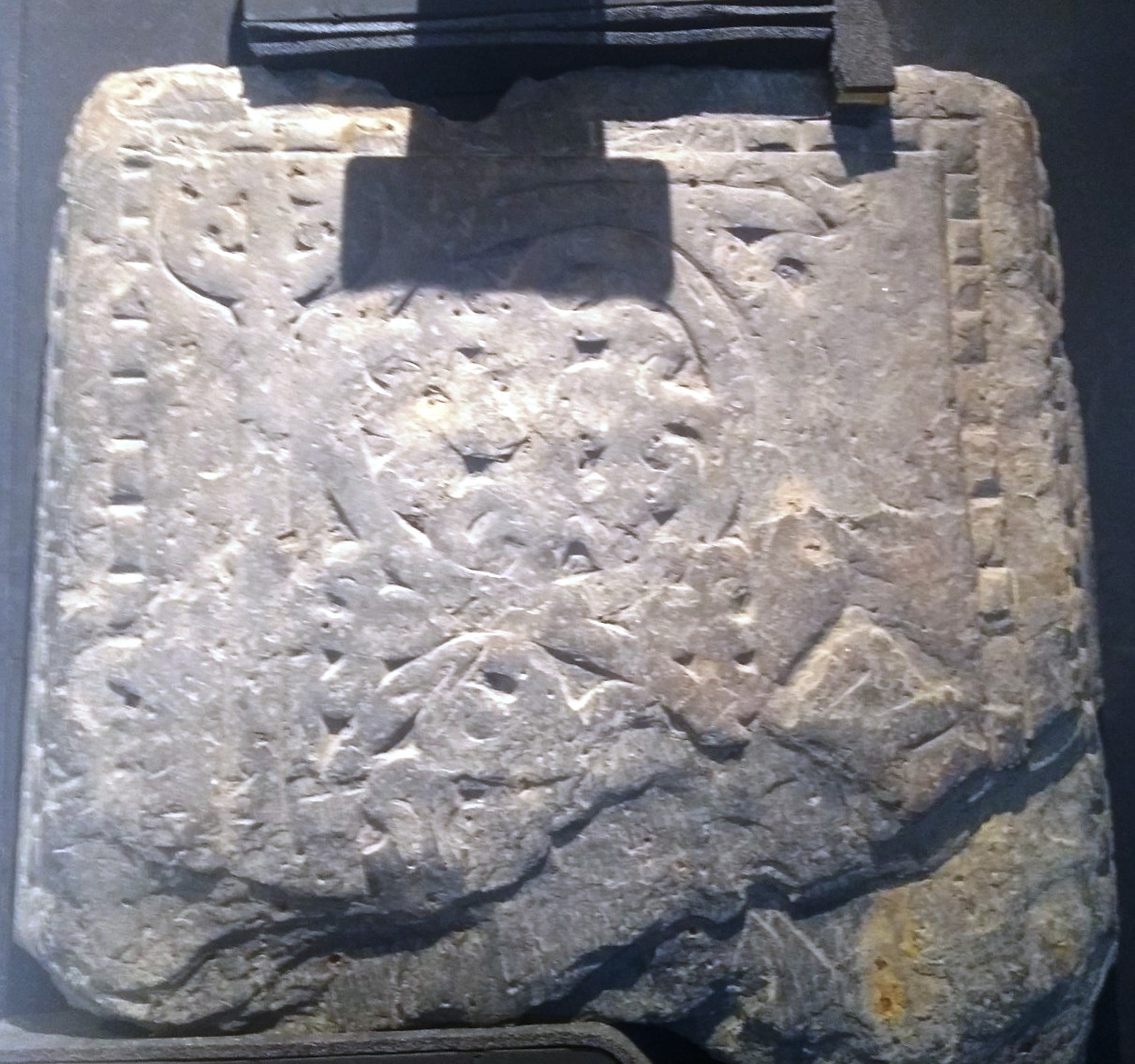
It was made from green chlorite schist, a hard durable metamorphic rock which allowed the sculptor to achieve intricate detail. Although not found on Lismore , this rock can be sourced in Argyll, a likely location being Loch Sween which would have meant transporting the 2 ton rock in an open boat the 60 miles to Lismore.
The cross would have originally stood 3 metres. The narrow sides, as seen with the help of the mirrors, were decorated with intricate geometric patterns of a style called Greek Key, a decoration found on early Christian ornaments throughout Britain and Ireland. The front and back would have contained panels of Christian symbols, but these are eroded and difficult to interpret. The Greek Key design and religious imagery would be similar to that in early illuminated manuscripts like the Book of Kells. This famous manuscript is contemporary with the cross and is the product of an Argyll monastery. It’s possible that the Lismore cross would have been painted with similar bright colours to those in the early manuscripts.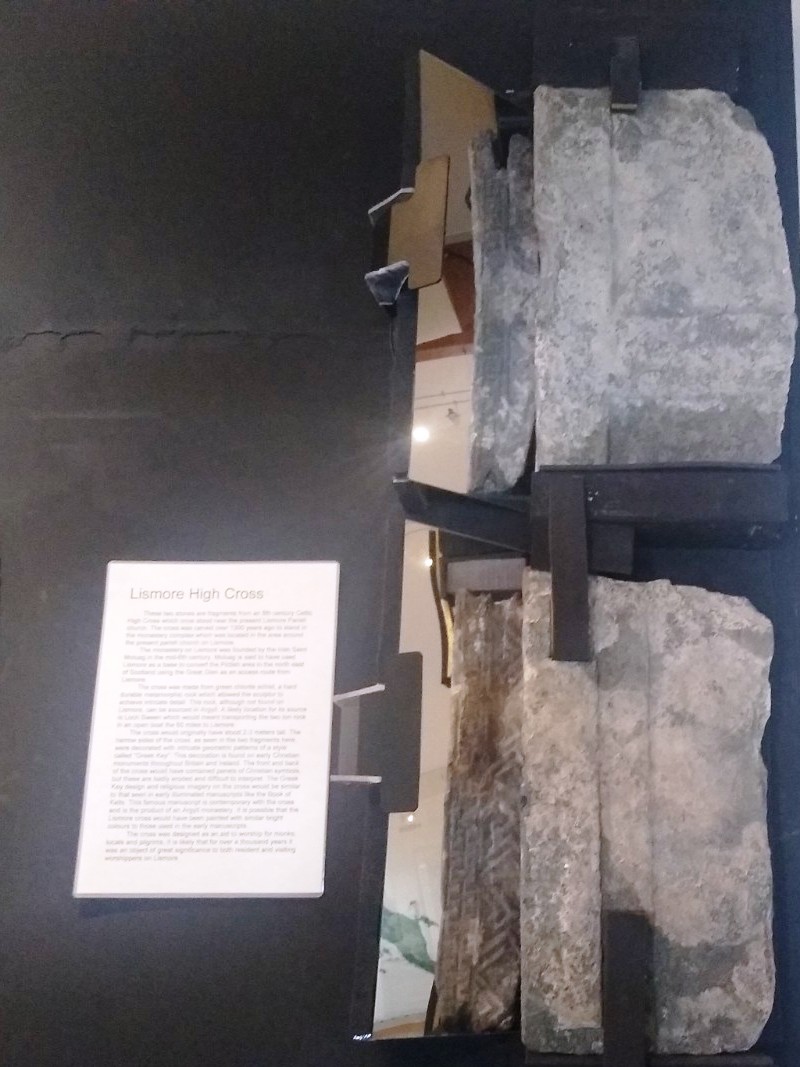
The cross was designed as an aid to worship for monks, locals and pilgrims. It is likely that for over a thousand years it was an object of great significance to both resident and visiting worshippers on Lismore.
The monastery on Lismore was founded by the Irish St Moluag in the mid 6th century. Moluag is said to have used Lismore as a base to convert the Pictish area in the north east of Scotland using the Great Glen as an access route from Lismore.