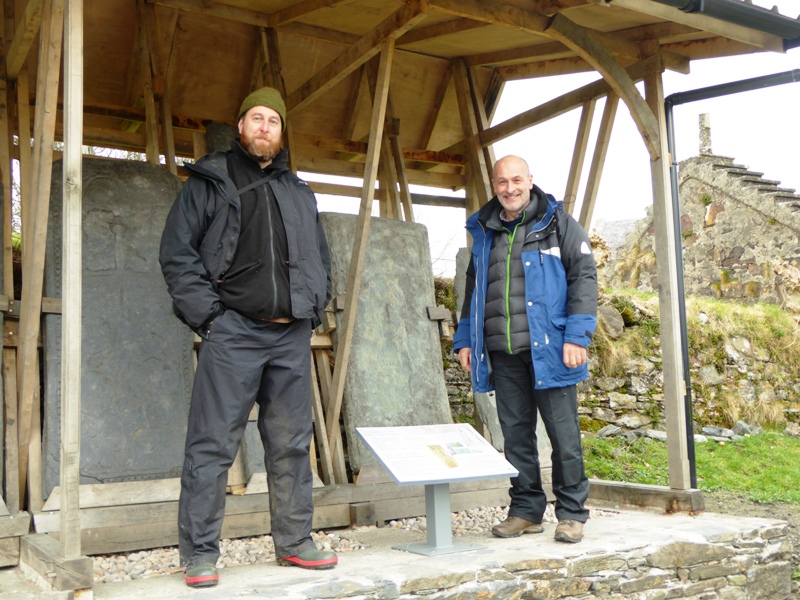
At the last episode of the Graveslabs Project (September 2015) most of the work on the shelter had been completed. The slabs were securely in place allowing Mike Rayworth, Colin Rowan and Duncan Drysdale to measure up for the bronze brackets to be manufactured.
The masons and carpenters were able to go off for a hard earned holiday after a long wet and windy summer. We were hoping for completion by the end of October but more adverse weather, and delay in supplies, meant that the very last stages had to wait until January 2016.
Meanwhile Lynn Vesco completed work on the three interpretation boards and sent them to the manufacturers, to be delivered in October. Islanders will remember Lynn as the designer of the beautiful banner boards in the museum.
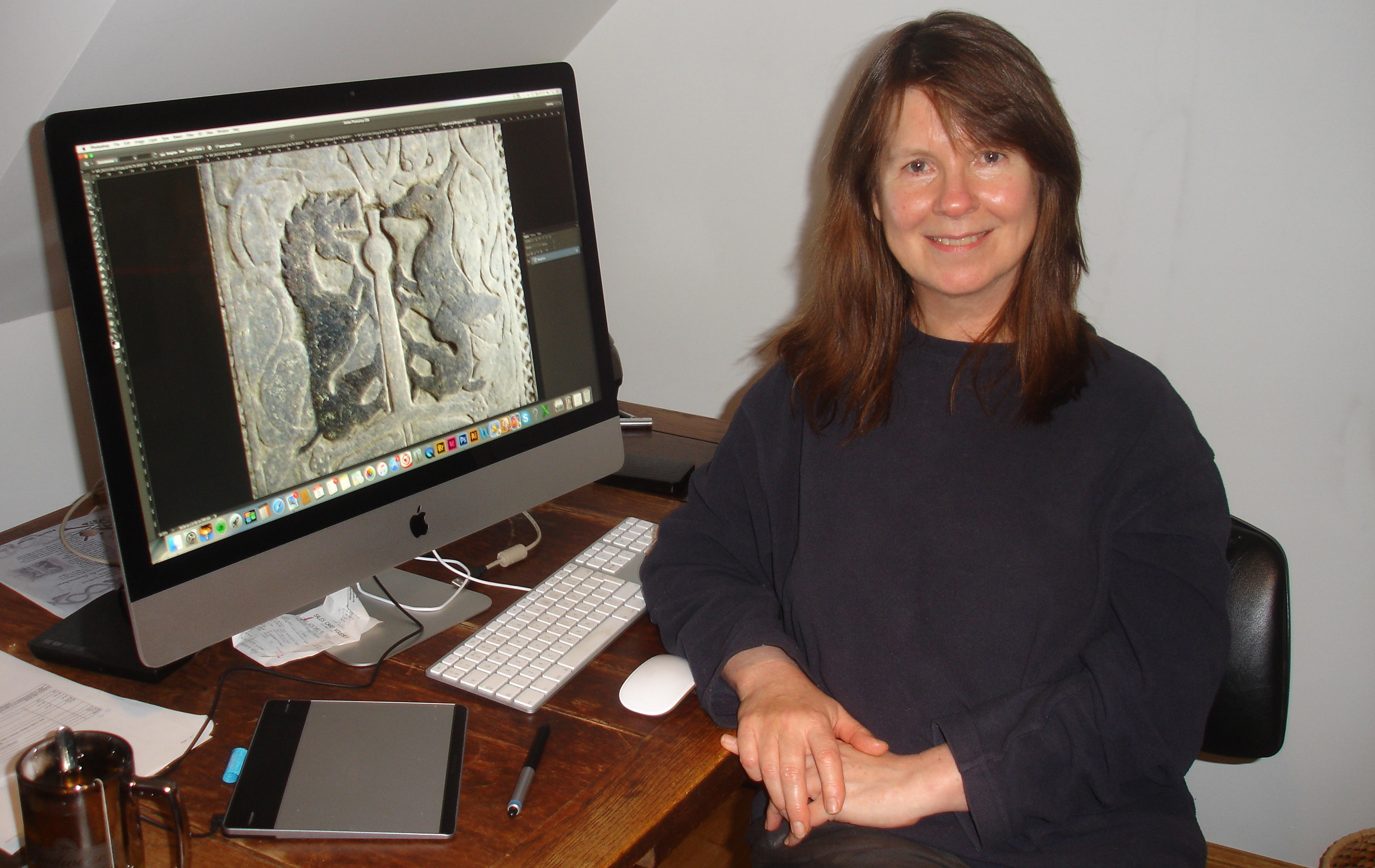
Lynn at work on the designs in her studio at Aberchirder
By November, Jim MacCormick had done a great job in building a facing wall to hide the concrete of the foundations. Using weathered stone, and the technique of holding back the mortar in the joints, he was able to achieve a very attractive finish, similar to a drystone wall.
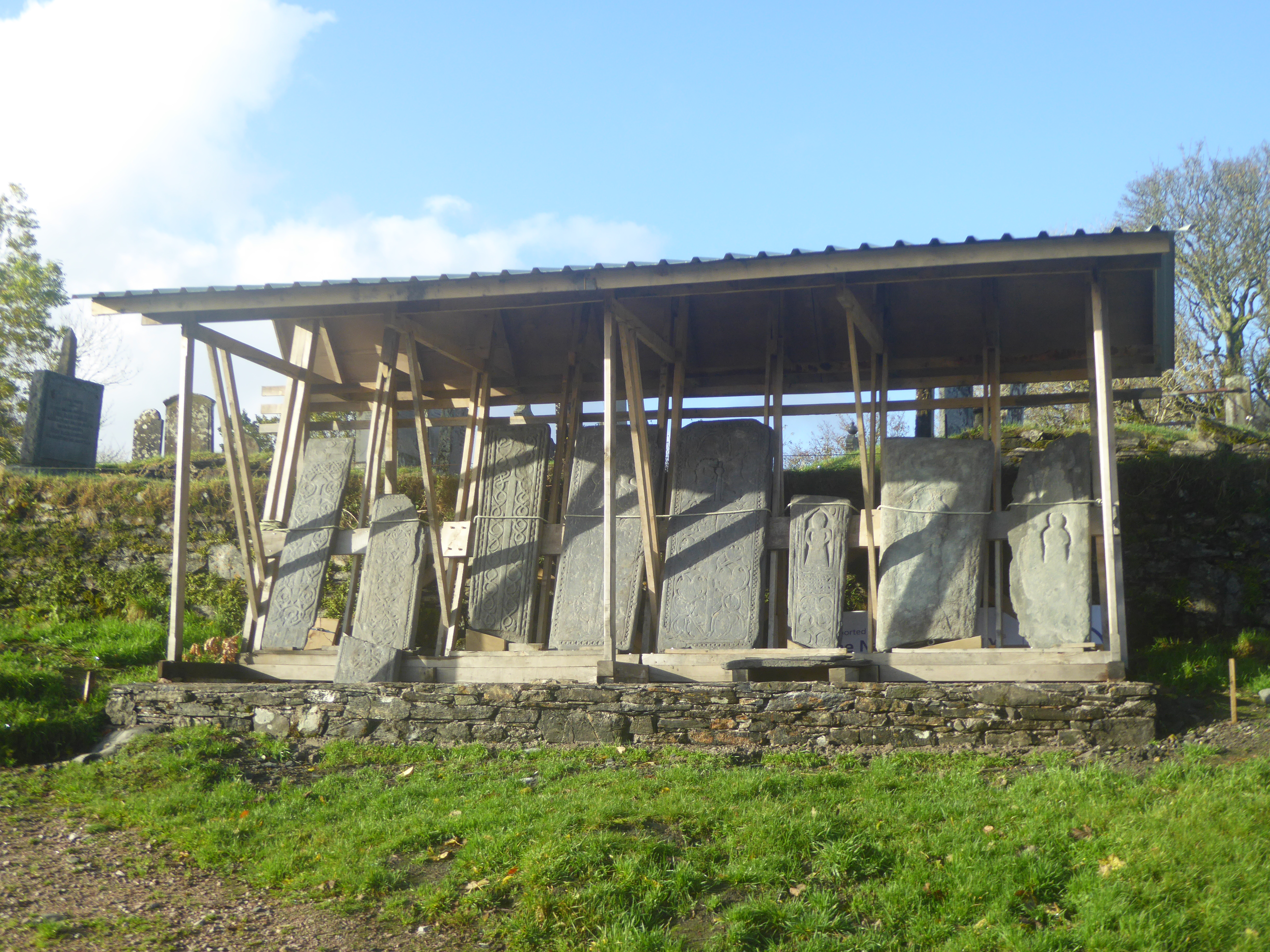
Completed Facing Wall, built by Jim MacCormick
Towards the end of the month, Mike and the Rowan Stoneworks masons had all of the materials to fix the stones permanently, removing the rope that had secured them for a couple of months. For most of the stones, their weight and the “angle of repose” in the shelter mean that they are stable unless pushed from behind, but at least three have irregular bases, affecting stability. The team dealt with these problems using bronze brackets lined with rubber (holding the stones back) and customized oak “shoes”.
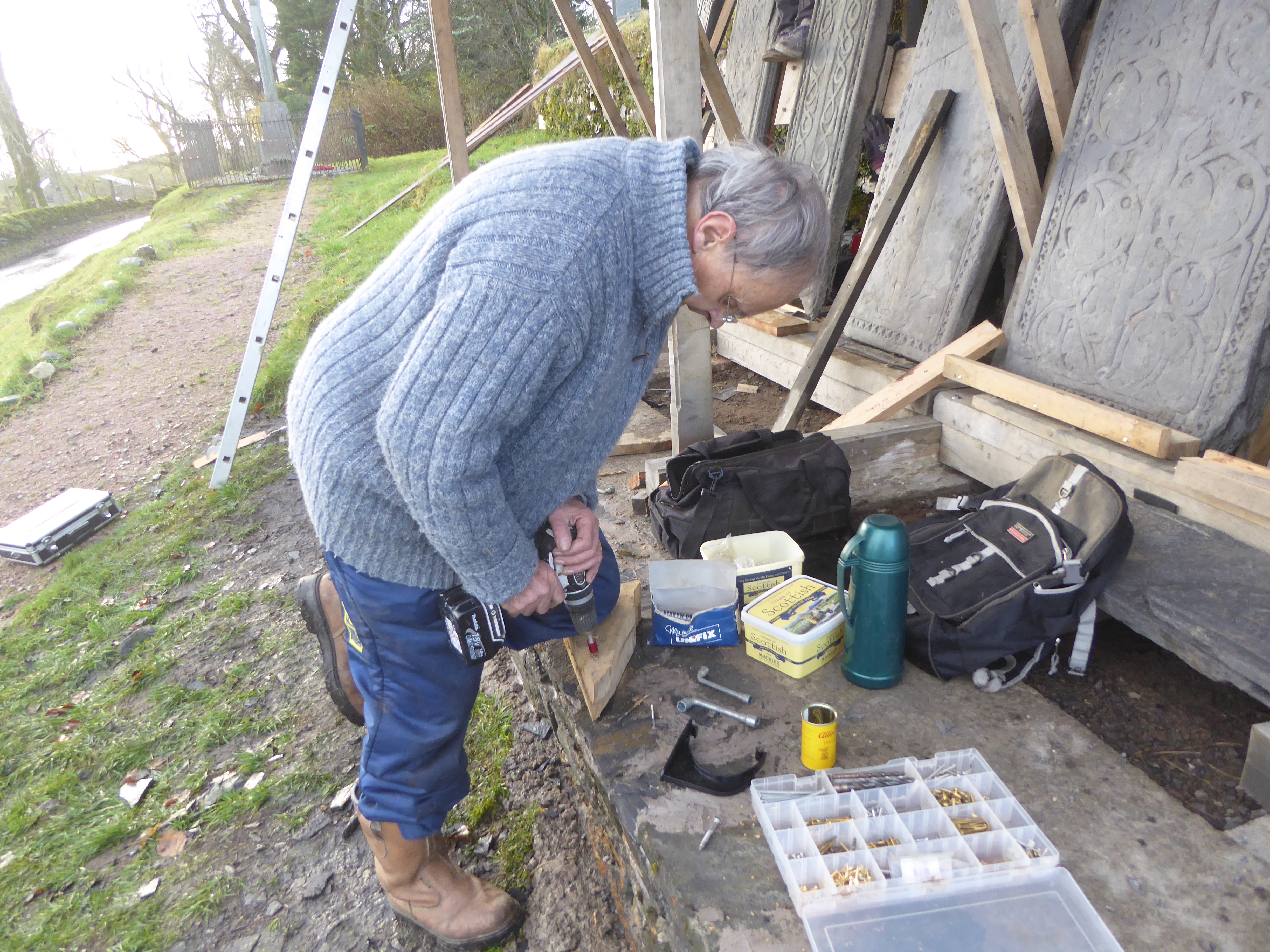
Mike making “shoes” for the stones
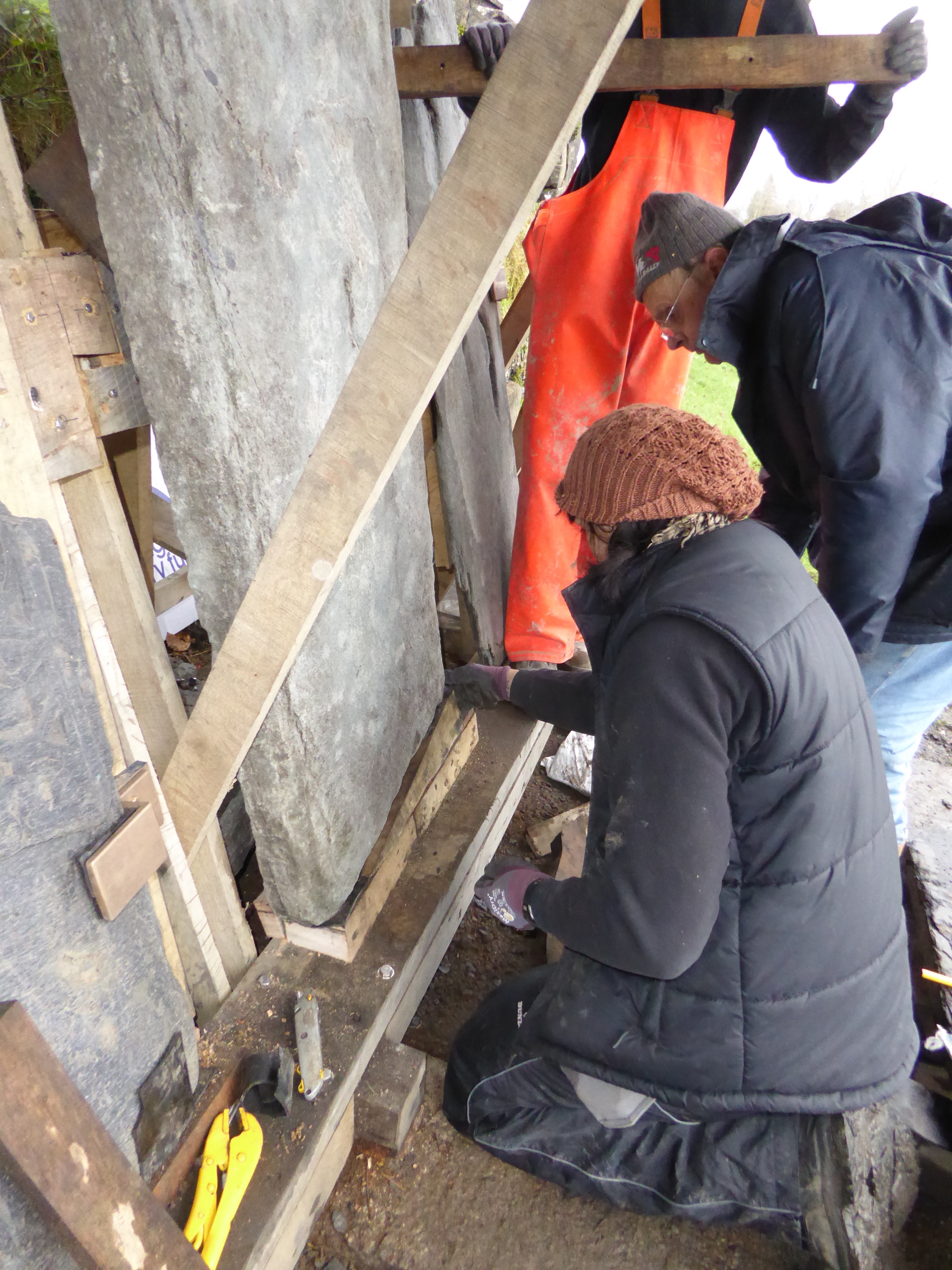
Mason Cass working with Mike on the “shoes”
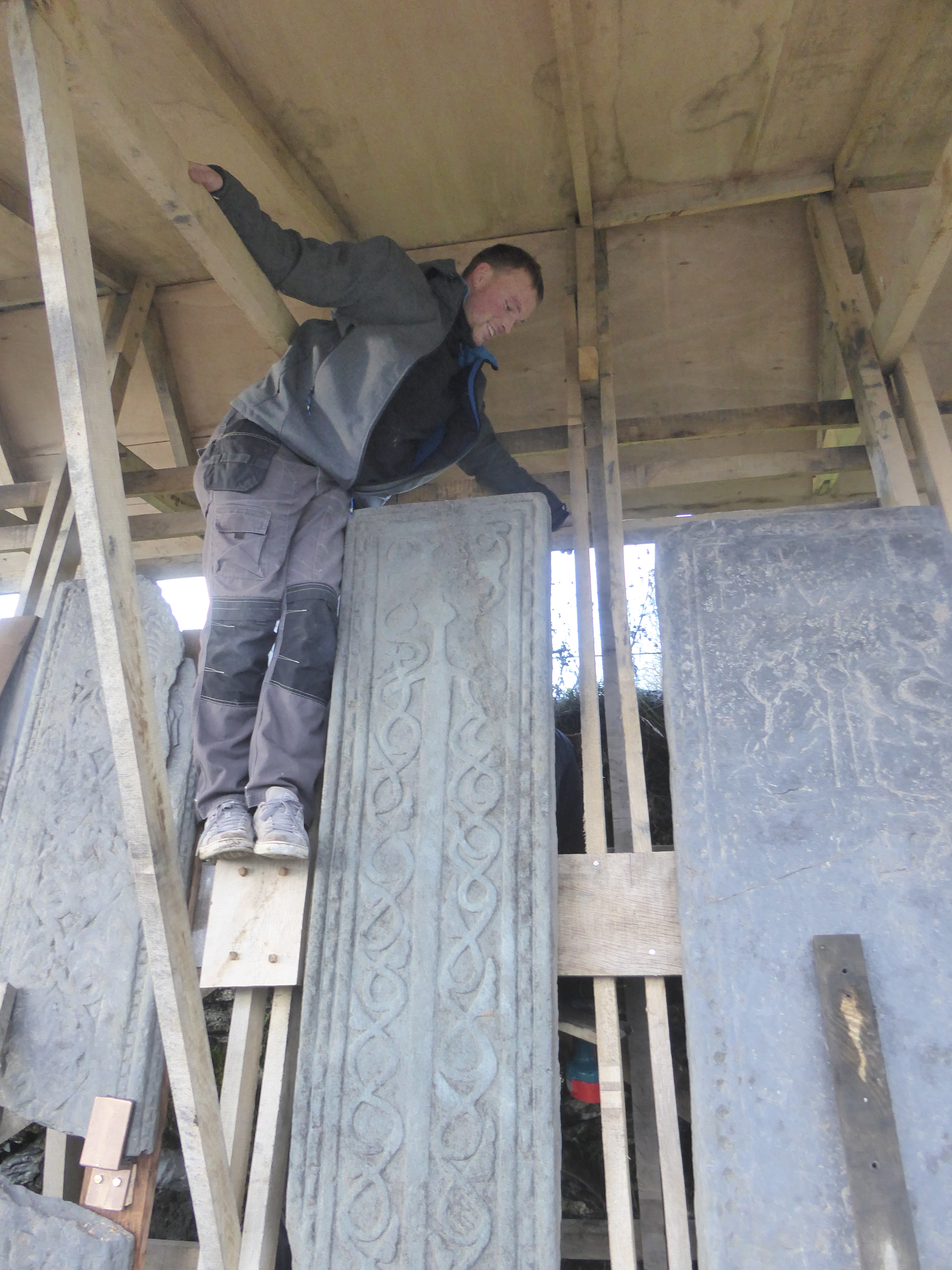
Acrobatics needed to align the stones
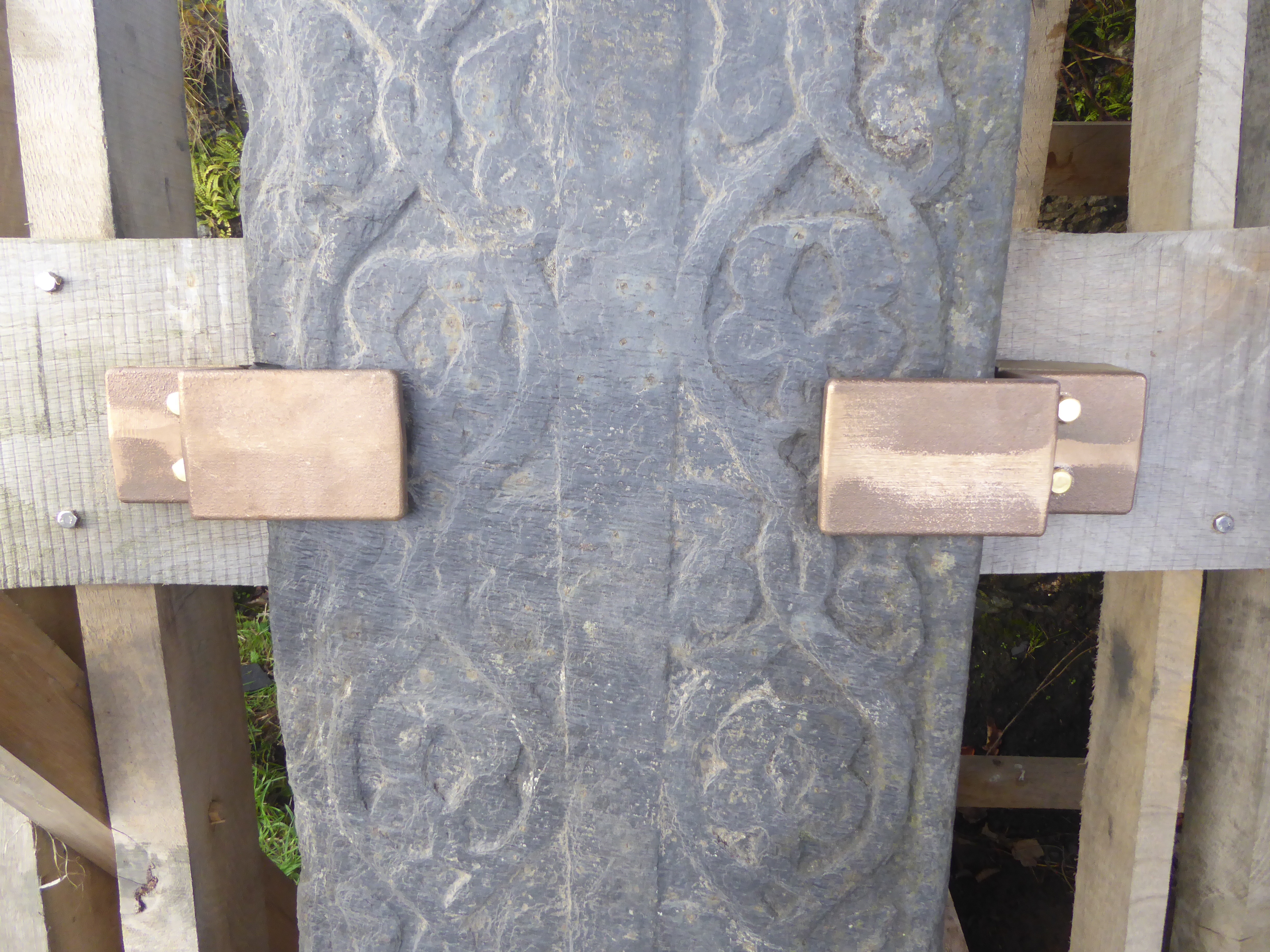
Bronze brackets
After the December campaign, all that remained was to fix the broken Iona stone with additional brackets, do the final cosmetic carpentry to tidy up the shoes, and surround the bases with shore pebbles supplied from Mull by Mull Builders. Once the “traffic” round the stones had been completed, it was possible, at last, to mount the lecterns and interpretation boards. When conditions permit, a gravel path will be laid down in front of the shelter.
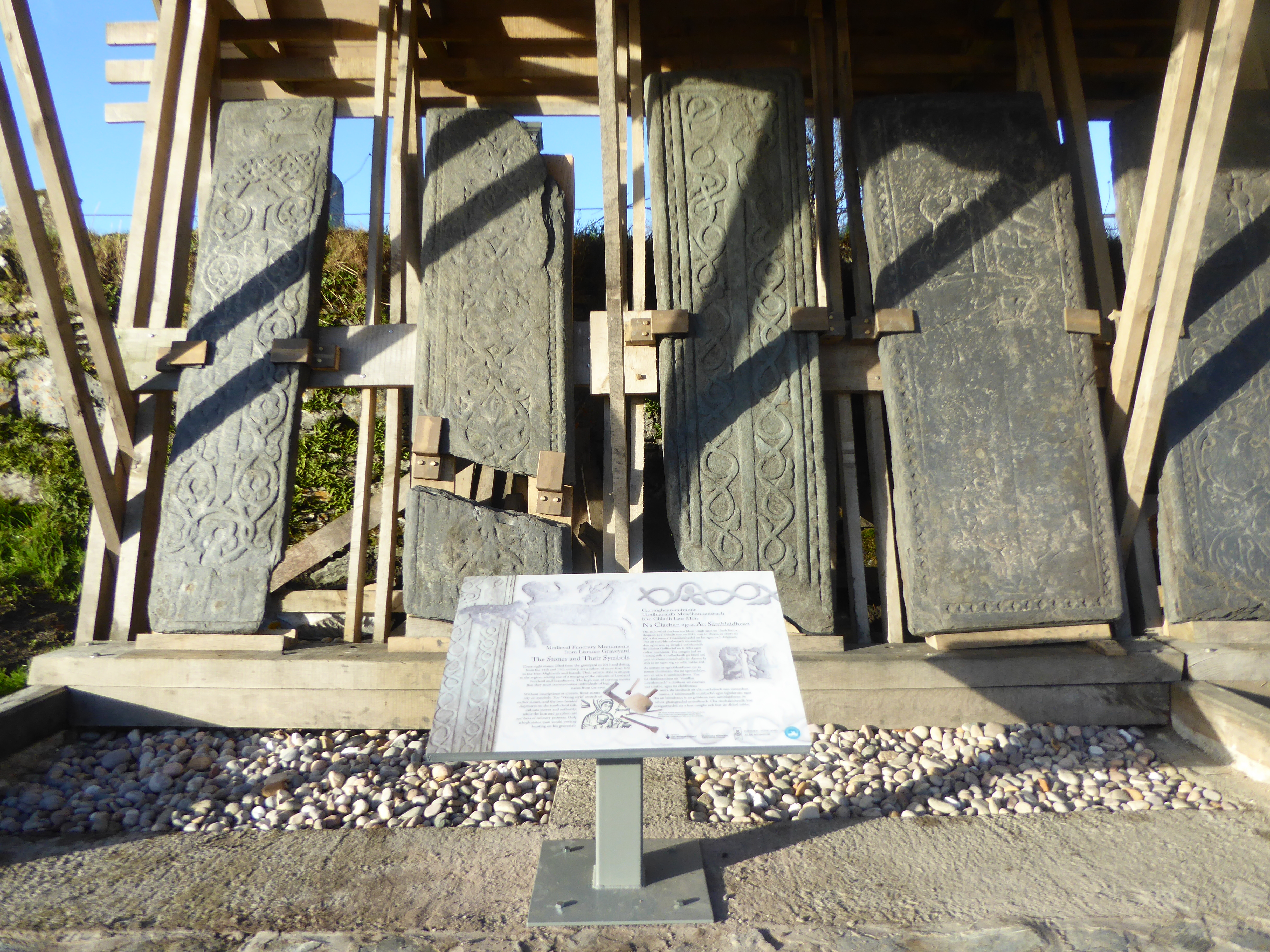
Lectern and Interpretation Board
So, at the end of January, we await a visit from Historic Environment Scotland to approve the long term maintenance plan, and sign off the project.
Successfully reaching the end of the project, Comann Eachdraidh and Lismore Church would like to record their gratitude to all the people who made it possible by their skill, determination, enthusiasm and good nature often under the most difficult conditions; to those who contributed outstanding design and graphics; to the officials of Historic Environment Scotland, who went out of their way to help and advise; and to our funders. As well as a concrete legacy in the form of the rescued stones and shelter, and skills developed in the course of the work, the island can look back to a most enjoyable Medieval Weekend in August 2015, and the making of new friendships and alliances.
 23 March 2016. Formal signing off of the Graveslabs project by John Raven and Stephen Gordon of Historic Environment Scotland. Final thanks to all who contributed their time and skill to the project.