Documents relating to the Resettlement of Baligrundle 1913/5
From the Baligrundle 1 Archive
In the 1840s, James Auchinleck Cheyne cleared the township of Baligrundle of its tenants and cottars, and converted the land to a sheepwalk. The community of 44 people in 1841 was replaced by a single shepherd household.
Following the publication of the report of the Napier Commission, the Crofters’ Act (1886) at last gave security to crofters, and ensured that their rents were fair, but nothing was done about the many landless families living in great poverty. As a result, pressure began to rise across the Highlands and Islands for the breaking up of cleared townships to provide new holdings. For a time, in the 1880s, leadership in this movement was provided by the Highland Land League (see Object for February 2014).
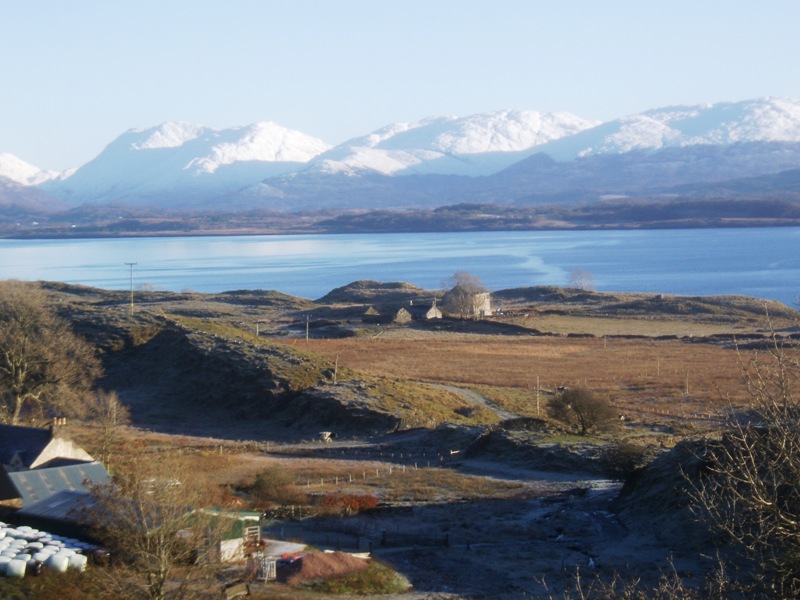
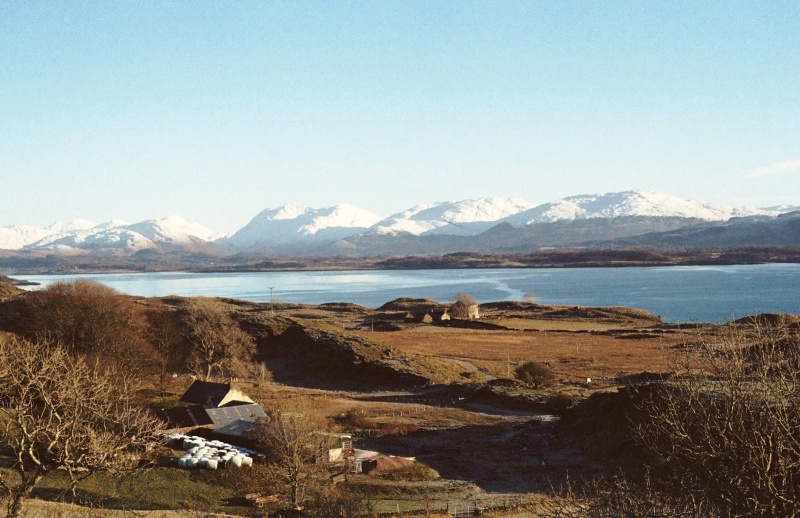
View over Baligrundle 2 to Baligrundle 1 from the West.
Following a petition for smallholdings by 47 men from the Parish of Lismore and Appin (the most recent of several requests to government), the newly formed Board of Agriculture for Scotland decided to act. In 1912, the townships of Craignich and Baligrundle were identified as suitable for resettlement, and, against the opposition of the landowner, the Duke of Argyll, the Board proceeded to survey the area and divide Craignich into 9 units and Baligrundle into 4. The next step was to identify potential settlers and fix fair rents for the new crofts.
Dugald Campbell, 35 and still single, ploughman in Killean on Lismore, was originally selected for Baligrundle 2 but, after readjustment, he took on the 90 acres of Baligrundle 1. He was a strong candidate, a ploughing match medallist and cup winner, with a proven record of thriftiness (savings of £250).
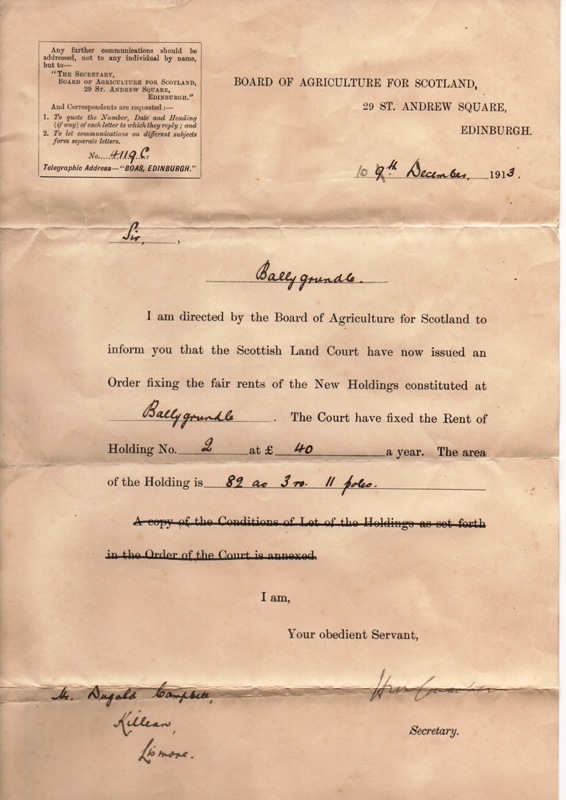
Scottish board of agriculture This records the setting of a fair rent for Baligrundle 2.
The second document shows that the Board recognized the need for decent housing on the new holdings, and its willingness to provide the necessary financial support on reasonable terms.
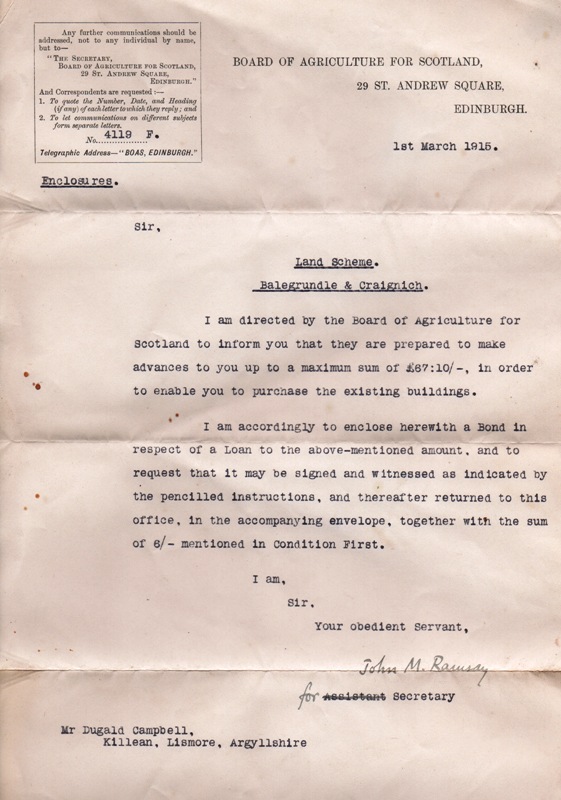
Baligrundle Agricultural board letter re land scheme
These, and other documents in the extensive Baligrundle 1 archive, show that the new Board was tackling the issue of “congestion” with what appears to be almost a revolutionary approach. It is sobering to think that this was 1915, when Britain was involved in a struggle to the death with Germany. The full story of the resettlement can be found in Robert Hay’s book, How an Island Lost its People published by the Islands Book Trust in 2013.
CELM is happy to place on record, once more, its gratitude to the descendants of Dugald Campbell for the gift of the archive, charting the life of a Lismore croft from its establishment up to the 1990s.