

Robert Hay and Douglas Breingan write:
Every seat was taken in a packed public hall in the afternoon of 9 May 2026 for a celebration of ten years of Community Archaeology on Lismore, led by Dr Clare Ellis of Argyll Archaeology.
The day’s programme was planned by the Comann Eachdraidh to tell islanders what had been found, particularly at the Early Church monastic site; to welcome back volunteer diggers from the mainland; and to brief local heritage groups on the findings.
The audience were not disappointed. It was an absorbing afternoon, with so much new and important information to take in. Dr Ellis set the scene by reviewing the work over the years, followed by Dr Carly McNamara (University of Glasgow), who explained how the fragments of stone cross slabs that had been found at Clachan, were similar to those at other Early Church sites across Scotland and Ireland, although the carving showed evidence of insular Lismore design. She was followed by Dr Gemma Cruickshanks (National Museums of Scotland NMS), a specialist in the archaeology of metallurgy, who confirmed that the crucibles found in the glebe excavations are amongst the best of the period found in Scotland, and that they were associated with fragments of moulds used to make penannular brooches and rings.

Archaeology Day 9 May 2026
We already knew that she had employed X-ray fluorescence to show that the crucibles had been used to melt copper, silver and even gold; but the audience were amazed to see a new image of a crucible surface showing small particles of gold. Professor Gordon Noble (University of Aberdeen) and Dr Adrian Maldonado (currently curator of the Galloway Hoard, NMS), both specialists in early medieval history, previously called “ the dark ages“, completed the afternoon by providing invaluable perspectives on the digs and finds, drawing on information from other sites in Scotland including Iona.

Archaeological finds 9 May 2026

Cross slab fragments

Cross slab fragments

Cross slab fragments

Archaeological finds 9 May 2026

Metallurgy

One of the crucibles used for melting precious metals

Archaeological finds 9 May 2026
One important issue was the extent and boundary of the monastery, which had proved difficult to trace on Lismore. Recent work had show that the classic Irish curved “vallum” was not common in Scotland; it was likely that the intensive geophysical and drone surveys of the glebe, carried out by the visiting Aberdeen team in the days before the meeting, will prove decisive in resolving this question.
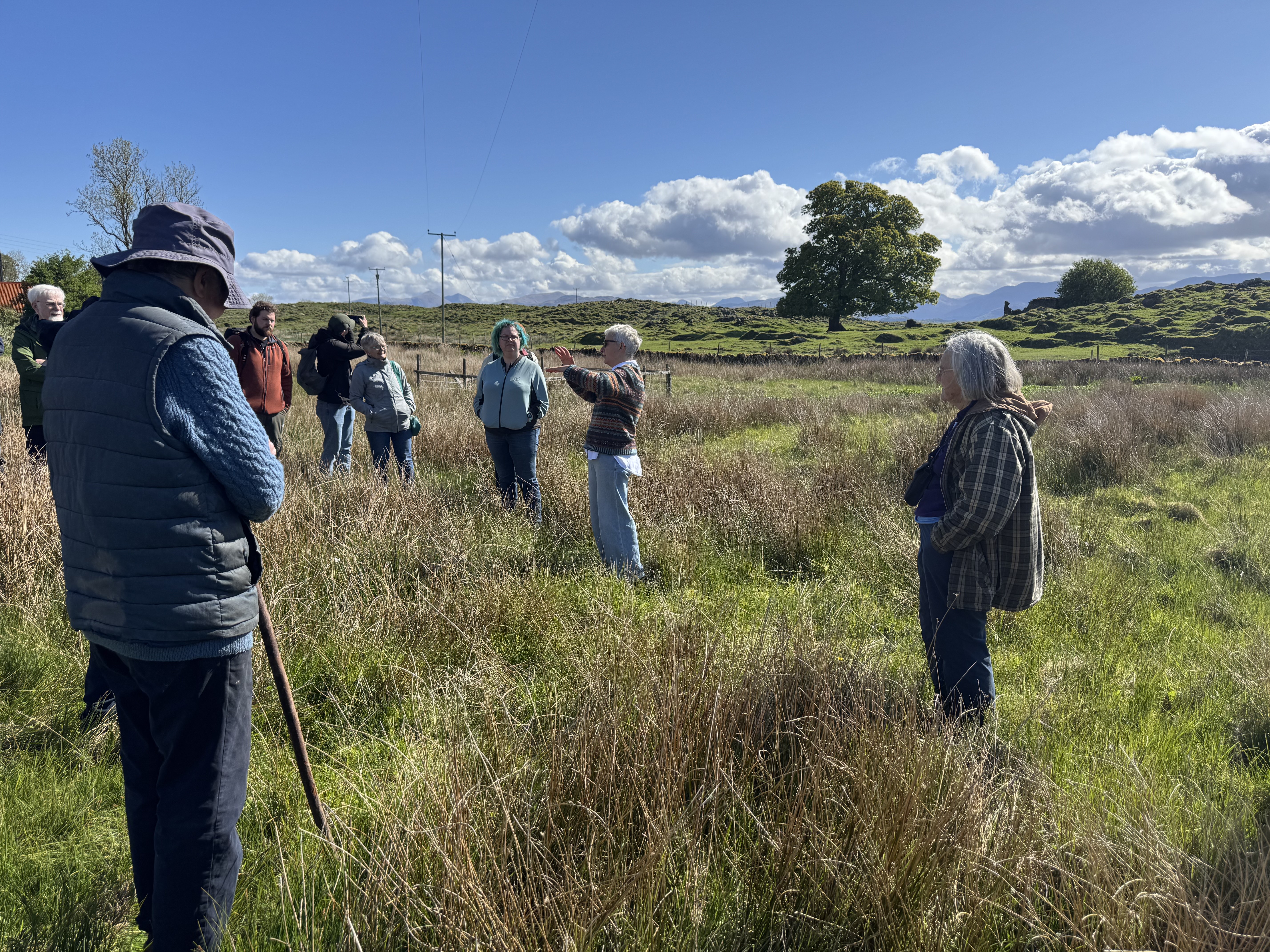
Dr Clare Ellis describing the very unpromising site where the workshop area was found.
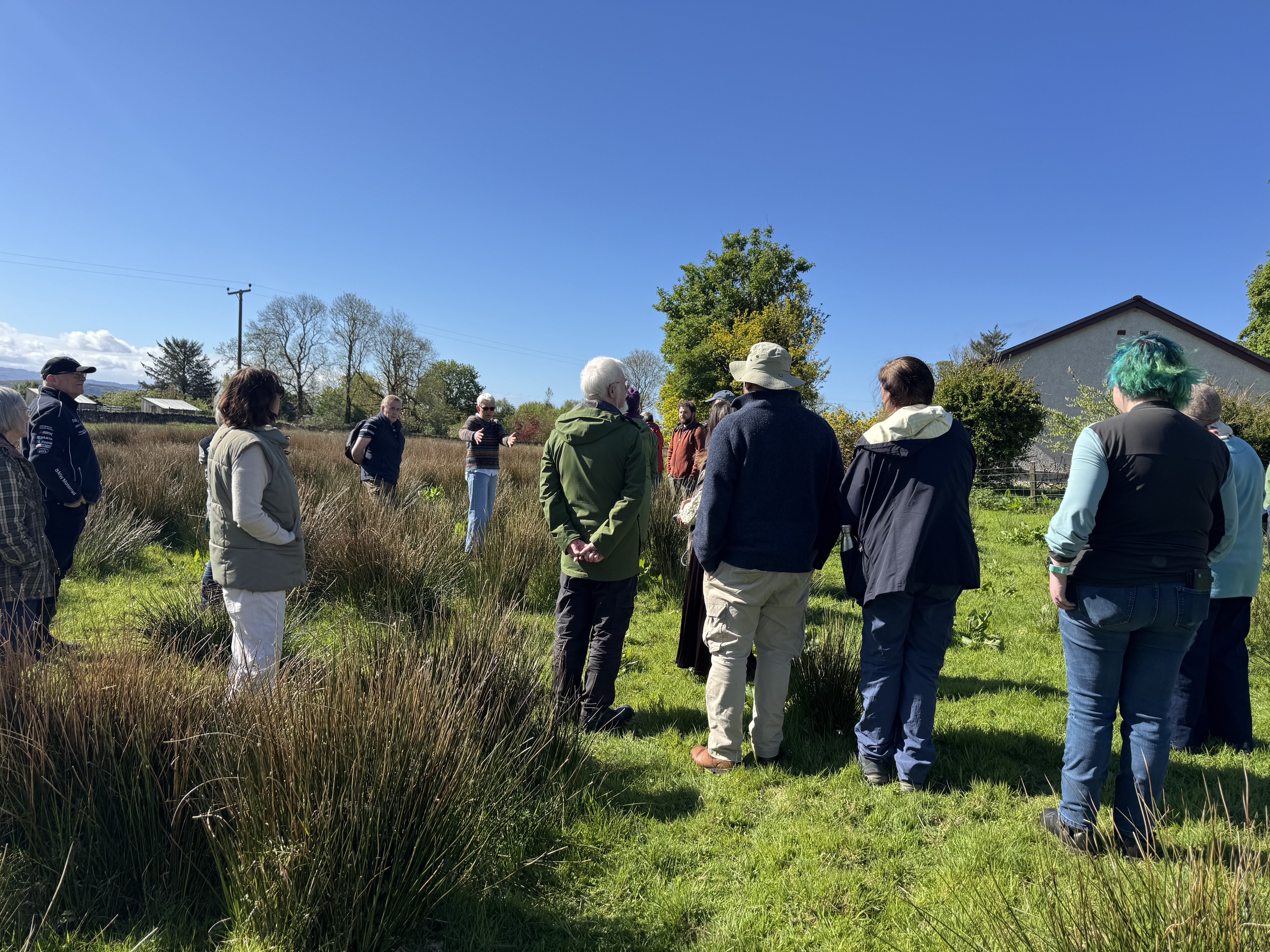
Dr Clare Ellis describing the very unpromising site where the workshop area was found.
Earlier in the day, visitors to the island had been provided with walking tours of the archaeological sites, and guided visits to the parish church, the choir of the 13thC Cathedral of Argyll. They were then directed to the Heritage Centre, where some of the important finds from the glebe were on display: carved stone; crucibles, moulds and slag; fine “motif pieces” carved in bone; and a flint arrowhead and knapping fragments, the first evidence of domestic occupation on Lismore in the Bronze Age.
The day was funded by a grant from the Argyll & Bute Supporting Communities Fund. It was possible because of the willing support of the island community, providing accommodation, transport, catering and projection. It was a pleasure to welcome four delegates from the MacDougall McCallum Foundation, USA, which has been a generous supporter of the Historical Society over several years. A full account of the excavation of the monastic site is currently in press.

Archaeological finds 9 May 2026

Archaeological finds 9 May 2026
Images: Hylda Marsh Jennifer Baker Pauline Dowling