
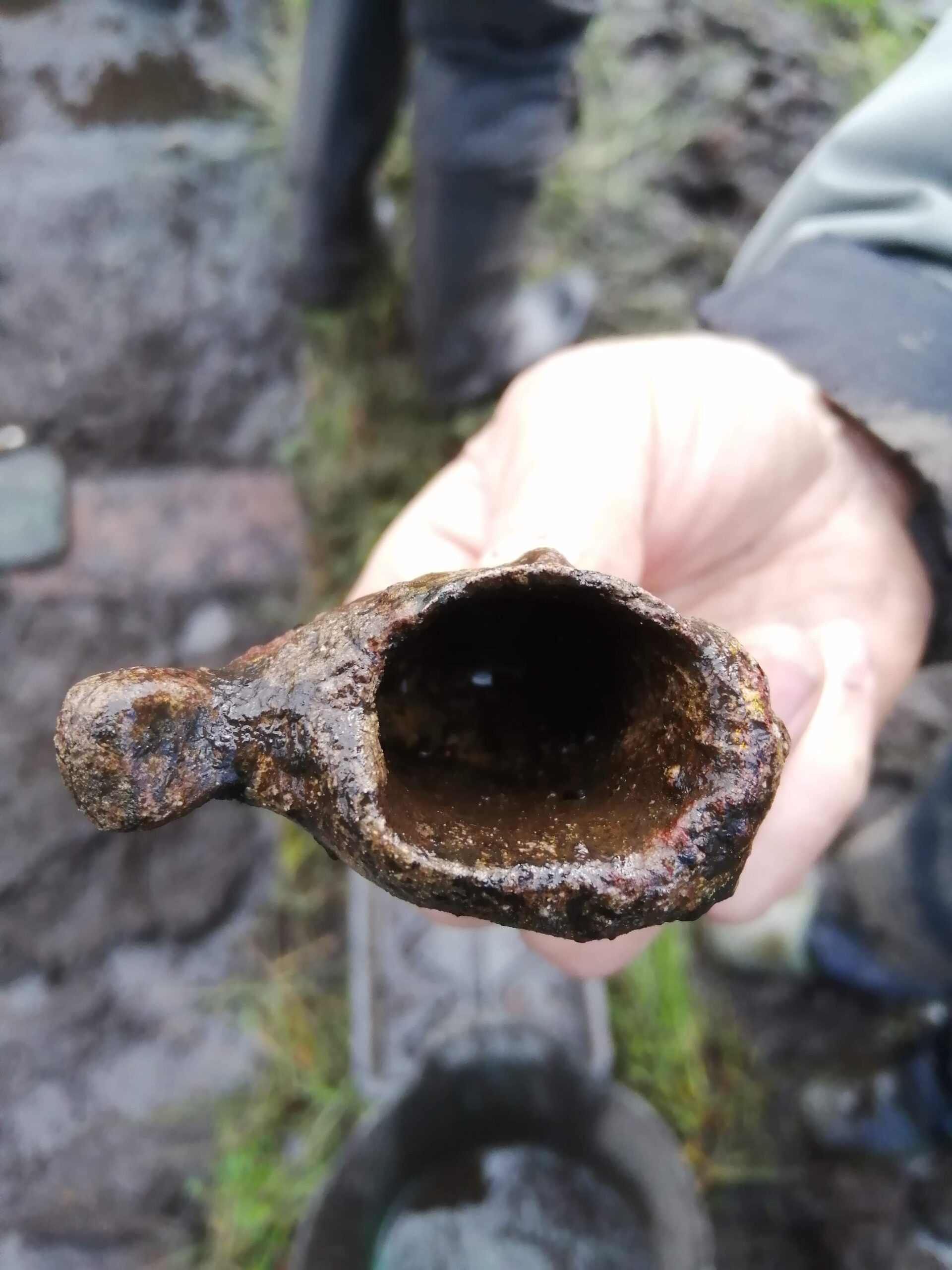
If we are going to understand what was going on in the Lismore glebe over a thousand years ago, we need post-excavation analysis of many unique finds.
In some ways, the actual digging is the easy and exciting bit of archaeology but, when you discover unique finds, you need the professionals to study and conserve them. This can take a long time and can’t start until funding is secured.
The volunteer digs in 2021 and 2022 yielded around 1500 significant finds but none was as important as the evidence of fine metal working. We found 187 crucibles for melting small amounts of copper, silver or gold, and moulds for manufacturing jewellery – brooches and rings. In a preliminary study of all our finds, the National Museum of Scotland experts rated the nearly-intact crucibles as the best examples found in Scotland from the early medieval period.
We now need the professionals to find out what metals were used by X-ray fluorescence measurements. And we need analyses of the human bones; carved stone, wood and horn; human bone; pottery; iron objects; iron-working slag; and coins,
All of this costs money. In spite of the generosity of individuals; as well as the MacDougall McCallum Foundation; the MacDougall Clan Society of America; the Hunter Archaeological Trust; and the Society of Antiquarians of Scotland, we are still around £10,000 short of what we need to complete the work. Last month, CELM launched a JustGiving page for the post-excavation costs: www.justgiving.com/page/robert-hay-1704551128616
We are delighted that this has already attracted £1,000 of generous donations.
We are now appealing to all those interested in Lismore, at home and abroad, to visit the page and consider supporting this exciting important next stage. Help us discover more about our sacred island.
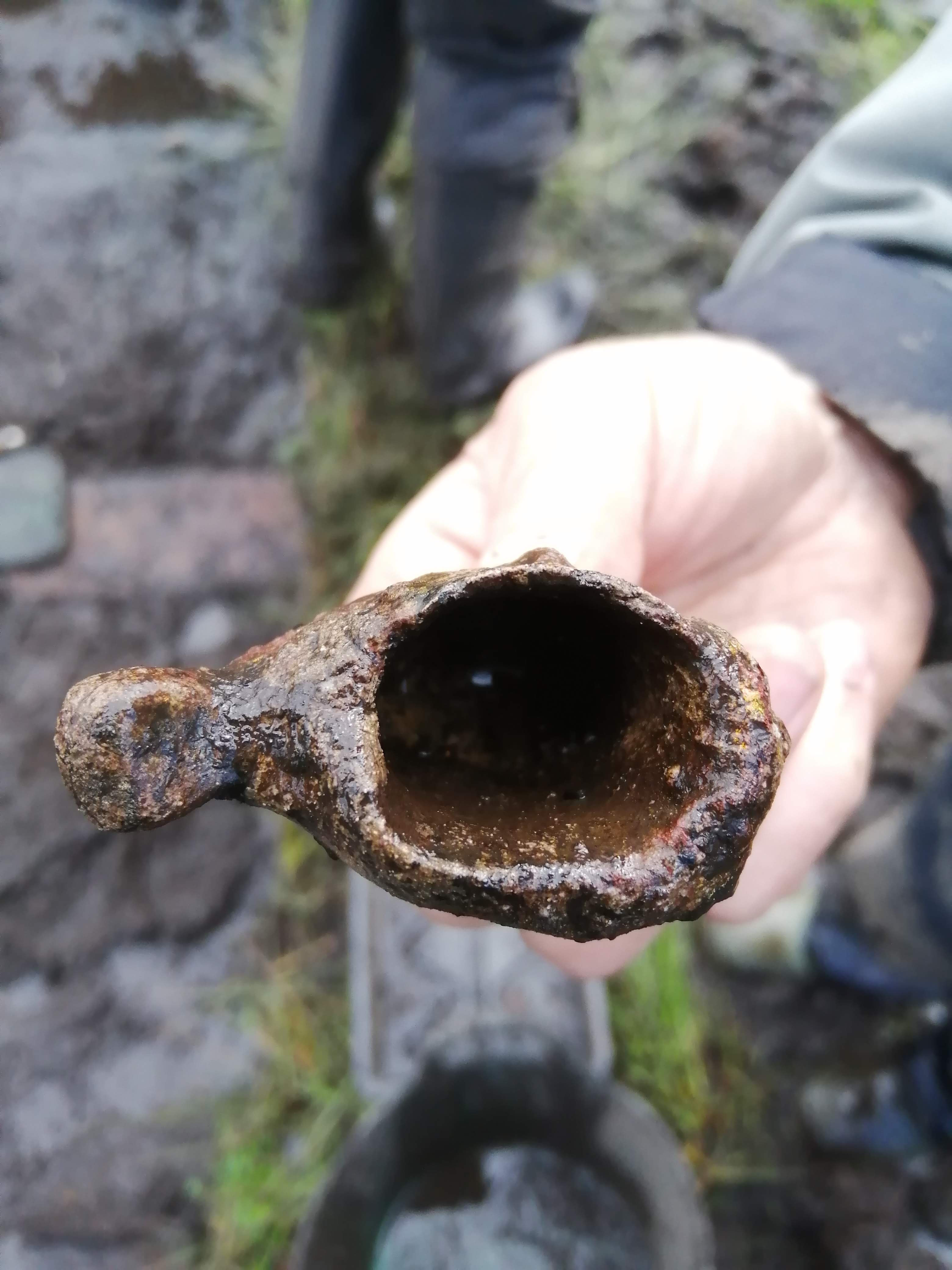
Crucible for melting metal
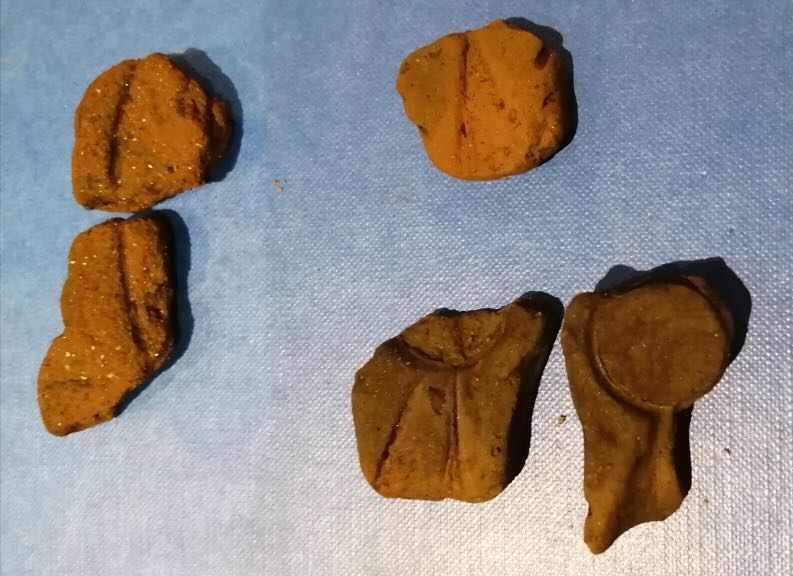
Fired clay moulds broken when the metal hardened to release the cast object
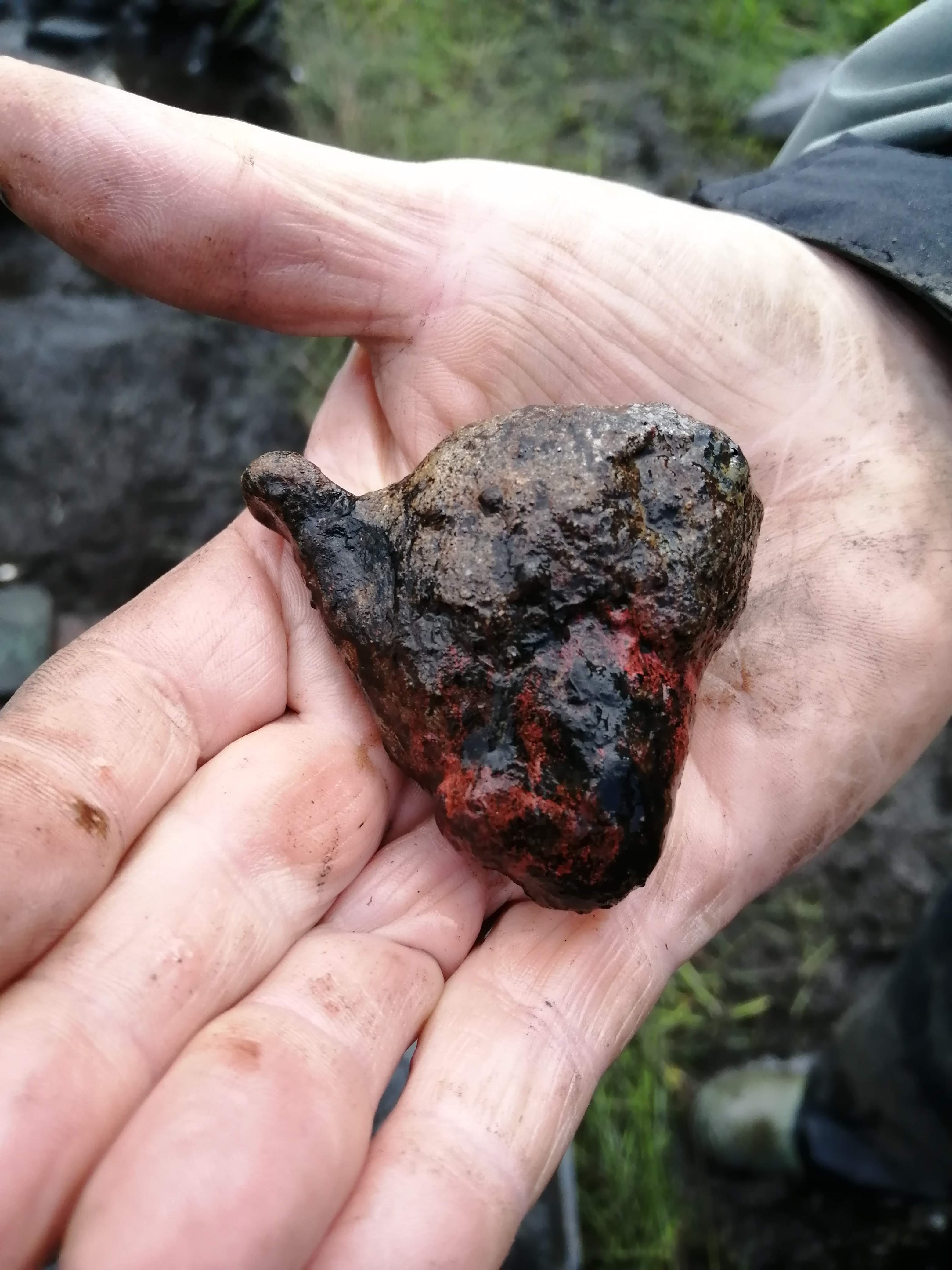
Crucible for melting metal