

LISDD:2006.123 Limestone boulder 480mm x 465mm x 310mm with 3 cup marks
Rock art in the form of cup or cup and ring marks has been found across Europe, with particularly fine examples in Spain, France and Italy. Nearly every year new examples are found in Scotland, particularly in Kilmartin Glen.
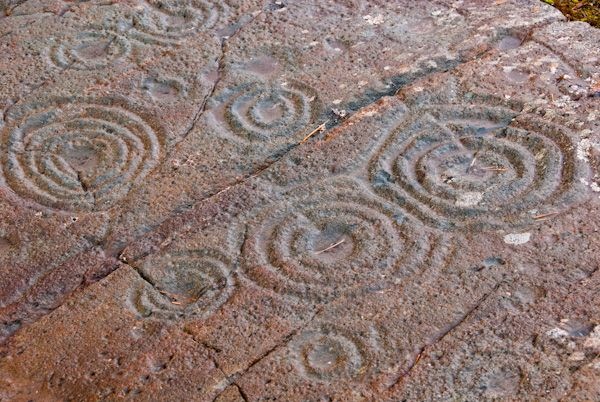
Cup and ring marks at Cairnbaan, Kilmartin
Reproduced with the permission of Kilmartin House Museum
It is thought that rock art of this kind, made by pecking with with stone tools, began in the Neolithic Period (from 4,000BC) and continued into the Bronze Age. Suggestions for its role in prehistoric life include religious ritual and waymarking.
The examples found on Lismore are plain, fairly crude cups without rings. The boulder in the collection, recovered from Balure, and confirmed by Dr Sharon Webb, has one clear cup of 75mm in diameter and two less clear cups. The groove on the boulder may indicate further working of the stone.
The old township of Cloichlea is named after the large grey erratic boulder (clach liath) which lay undisturbed for generations in the arable land on a terrace above Kilcheran Loch.
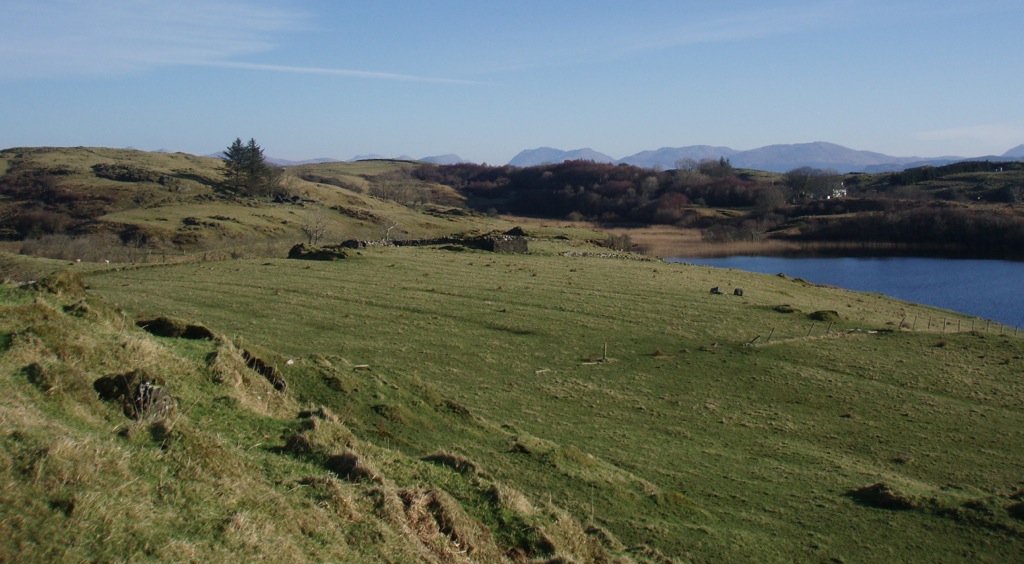
The ruined township of Cloichlea, with the broken grey stone to the right
The boulder was eventually broken up in the Victorian Era but left in situ in four pieces possibly because of uneasy feelings about its ritual importance as there is a series of simple cup marks on the north face of the largest fragment. It is not too fanciful to think that the earliest farmers used these marks to symbolise their relationship with the land.
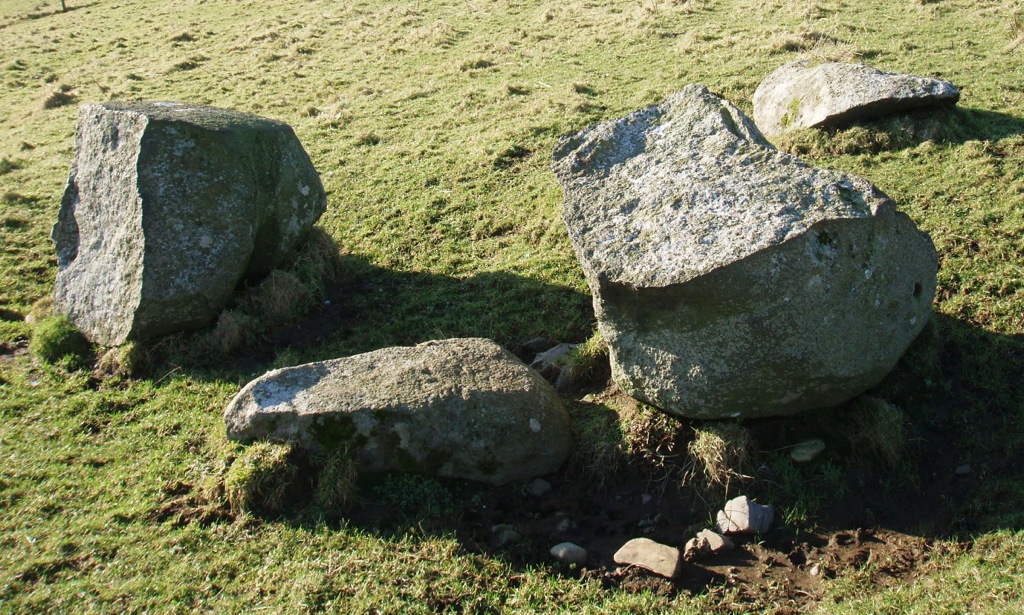
The broken grey boulder, Cloichlea
The most notable cup marked rock on the island is the “Baptism Stone” or Font, high up in the old graveyard.
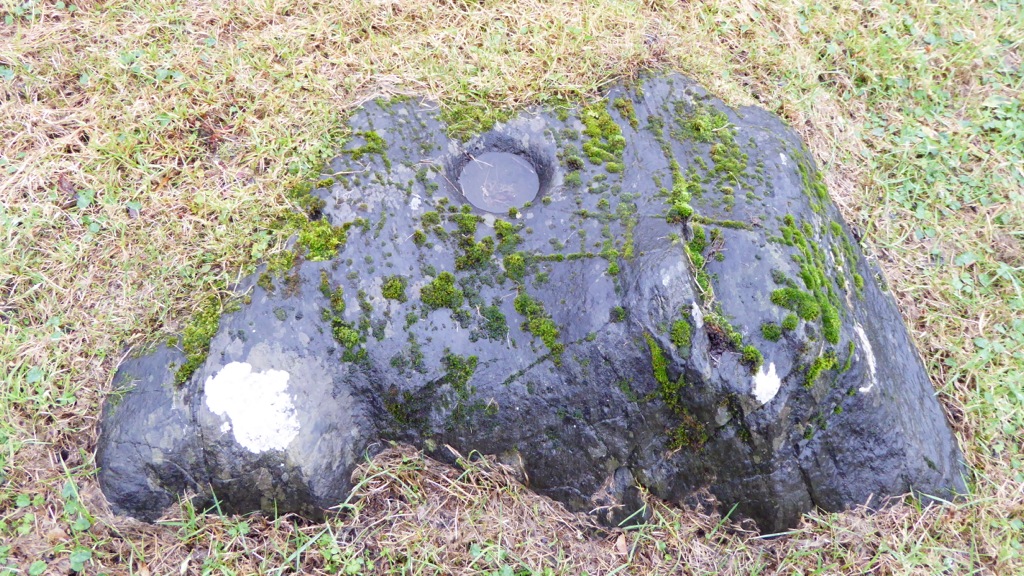
Baptism Stone in the old graveyard
Because of the accuracy of the carving, and the position of the rock, this may not be a prehistoric cup mark. Possibly dating from the early church, the 130mm diameter depression is said to remain water-filled at all times.
We encourage all islanders and visitors to keep their eyes open for any other marked stones on Lismore.